Categories
Conferences/Events Tech in the classroom

Connecting Educators and Edtech

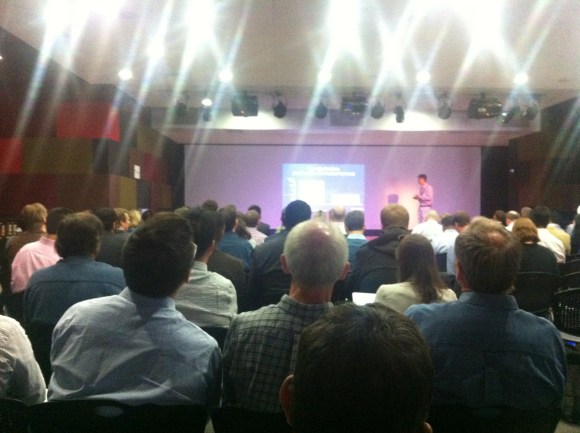
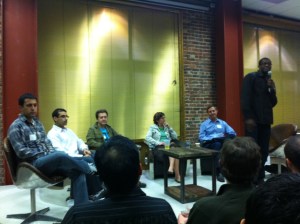
In partnership with the Silicon Valley Community Foundation, I hosted my second Teacher Tech Talk event yesterday which focused on how some schools and educators are using Google Apps for Education (GAFE). Rushton Hurley, a member of the first cohort of Google Certified Educators and Founder/ED of NextVista.org, kicked off the event highlighting some of his favorite aspects of GAFE but more importantly shared an inspiring message for how educators should approach integrating technology.

“It is impossible to stay on top of current technology solutions… So don’t worry about it! Find what works best for you and use it in a way that allows you to tap into your inner explorer.”

Kim Brown and Tim Sato from Portola Valley School District shared specifics around how they deployed the Google Engine and Chris Buja from the startup, Hapara (fresh out of Imagine K12,) provided an overview of how their Teacher Dashboard makes it dead-easy for teachers to manage and optimize the GAFE experience across countless students and documents.

If you are interested in learning more about Google Apps for Edu, I recommend checking out the upcoming GAFE Summit July 12/13 in Santa Clara and reading Richard Byrne’s (FreeTech4Teachers) GAFE Guide.

If you are an educator and looking to get plugged into the edtech startup scene, check out the Launch EDU conference June 12-13th at Microsoft in Mountain View. Please email Megan Dickey at megan@launch.co for a free ticket.

Thanks to all who attended and helped spread the word. It has been truly energizing to see the growing interest in this community, and brainstorming ways to bridge the educator and edu startup worlds. Keep an eye out for details for the next Teacher Tech Talk event coming up in July all about Formative Assessments in the Cloud.
Categories
Conferences/Events PBL (Project-Based Learning)

Making the Classroom of the Future

The Maker Movement is rocking the education world in a big way.

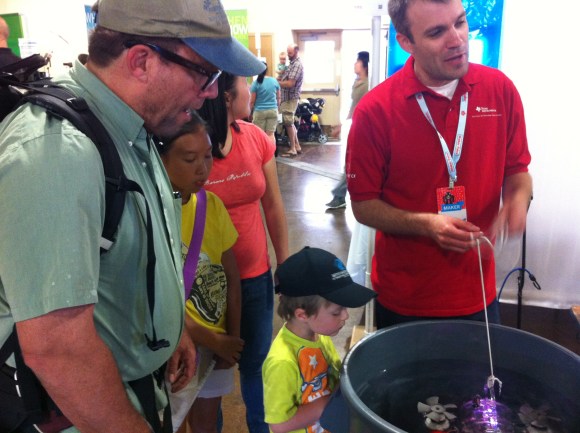
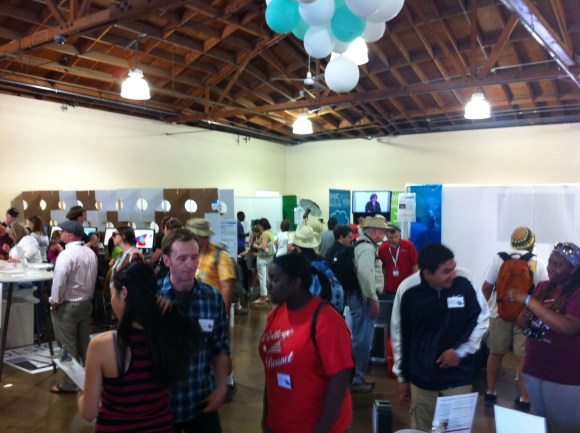
Kudos to EdSurge for organizing all the activities in the Education Pavilion during this year’s Maker Faire, modeling the classroom of the future. From Thursday’s educator meetup to Saturday’s ongoing interviews with Steve Hargadon, that team and extended community of volunteers really kept the Maker-Education conversation buzzing. The several hours I spent there this morning flew by and I have a feeling that even if I were there the whole weekend, I wouldn’t have had the chance to absorb all the amazing creativity, art and energy flowing in this community. While I spent most of my time in the DIY Learning: The New School area with usual edtech suspects like Motion MathRoot-1 & Educreations, I’m glad I got to catch a glimpse of some of my favorite new tinker toys in action, especially LittleBits and Roominate.

As amazing as this weekend was, the dream is to figure out how to truly make classrooms of the future that embody all the making, doing and learning that is at the essence of Maker Faire. Of course, for me the highlights were initiatives that are trying to bring these types of experiences to communities beyond our own.

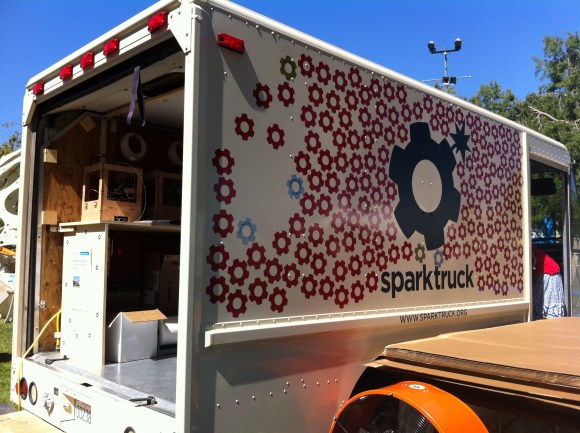
SparkLab was there showing off their newly suped-up SparkTruck, channeling the energy from their Stanford d.school class and successful Kickstarter campaign. They are kicking off their summer road trip over the next few weeks, on a mission to spread “the fun of hands-on learning and encouraging kids to find their inner maker.”

Friend and current Harvard Ed Doctoral Fellow, Karl Wendt, was demonstrating some of his creations from his newly launched non-profit, Discover-Create-Advance (DCA), trying to bring project-based learning (PBL) to all students. They are “currently focused on building a library of highly motivating projects, providing alternative funding for great projects, and posting a series of videos that assist teachers and students in facilitating project based learning.” By empowering teachers, through instructional videos and funding, this effort gets at the core of what makes it so difficult to really bring PBL to every classroom. His video deconstructing a hair dryer is one of my favorites and I cannot wait to see what comes next from DCA.

Ideally, newly launched efforts like the Maker Education Initiative will help channel all the inspiring energy from Maker Faire and other DIY/PBL initiatives to bring these learning opportunities to kids all over the world. The classroom of the future will be whatever we as a society want… so we just have to Make It Happen!

Categories
Conferences/Events Tech in the classroom

Calling All ‘Teacherpreneurs’

I’m excited to be hosting my next Teacher Tech Talk event later this month, in partnership with the Silicon Valley Community Foundation. These events stemmed from my growing interest in bridging the gap between classrooms and the education startup world, and the larger vision is to empower ‘teacherpreneurs,’ who are the ones that will truly drive change in our current education system. Here is the invitation so please help spread the word to any aspiring ‘teacherpreneurs’ you may know!

~

Are you an educator interested in learning how to better integrate tech tools into your classroom? Do you have an idea for a fabulous edtech product that you’d like to share with the startup community? Do you just want to connect with other teachers thinking about these questions and edtech in general?

Join us for our next Teacher Tech Talk event on Wednesday, May 30th from 4-6pm in partnership with the Silicon Valley Community Foundation. The vision is to co-create a community of educators and entrepreneurs to collectively design and implement solutions to improve teaching and learning for all students.

This event will focus on Google Apps for Education and will feature Kim Brown, Lead Technology Specialist from Portola Valley School District, and members of the technology start-up, Hapara, (fresh out of Imagine K12) which specializes in deploying Google apps in classrooms and schools.

In addition to hearing from these speakers, you will get a chance to talk about the opportunities and challenges associated with technology tools for education and the issues educators are encountering in the classroom that either need to be addressed or share solutions that can be scaled more broadly.

Hope you can join us! Please RSVP.

Categories
Conferences/Events Ed Reform/Policy Investing in Education

Is there Really A Movement?

Howard Fuller was absolutely amazing as the keynote speaker at the New Schools Venture Fund Summit this past Wed, appropriately kicking off the event asking everyone to think about why they are here, doing this work, and what role they can and will play. He passionately expressed the sense of urgency we need to have in solving the challenges of our current education system and echoed a similar message from Don Shalvey, that I wrote in a previous post, that there is room for everyone to play a meaningful role in improving education outcomes for all students.

Many of his comments were twitter-worthy (and the audience did an impressive job keeping the tweet stream (#nsvfsummit) flowing all day) but this was by far my favorite.

“We think we are all awesome. We are not all awesome. Most of us are regular people. We have to create systems where regular people can have awesome results.”

For me, this captured the essence of the entire event. NSVF has been supporting some of the top edupreneurs since 1998, who span from school builders to tool builders and everything in between, who are working to create ways in which regular citizens can make a real impact on teaching and learning.

The title of this post borrows from that of the opening session itself, questioning whether the current education reform movement is moving fast enough. I wonder if outside our bubble of edtech trends and the charter reform, is there enough community engagement and energy to even classify this as a movement? I would love to see what happened to the environmental movement take shape in the education world, where regular citizens not only have awareness of the problem but have actionable ways in which they can make a difference. Everyone recycles and that’s awesome. Can we get everyone to volunteer at their local school or contribute to educating all our children in other every-day ways?

Fuller simply states that in order to build a movement, we must engage people on a grassroots level. I whole-heartedly agree, which is why I’ve been organizing a growing community of educators who are interested in helping build the edtech movement through my Teacher Tech Talk events. (The next one is coming up on Wed, May 30th.)

The rest of the day was equally amazing, full of great speakers and opportunities to connect with fellow edupreneurs, old and new. It would be impossible to capture everything here, so keeping with their efforts to foster this community, NSVF will post all the sessions online. (A few of the sessions are already live on NBC News Education Nation.)

If you only have time to watch one session, skip straight to the closing conversation between Rahm Emanuel and Laurene Powell Jobs. Clearly a seasoned politician, he had an established message to convey, however, his passion for fixing the broken education system in Chicago was pouring off the stage.

“We’re not for reform, we’re for results. As reformers, we’re for education excellence, not educational reform. I think we confuse the means with the ends.”

It was such a powerful way to close the day and bring the conversation back to the focus of all our efforts, and events like the summit. The focus should not be reforming “the system,” or unions, or teaching training programs, etc… But rather engaging regular citizens in building a grassroots movement that optimizes for educational excellence for all students. If we could do that, then maybe we are all awesome.

Categories
Conferences/Events Entrepreneurship Investing in Education

Imagine that!

Imagine K12 hosted their Demo Day for batch #2  today and I was impressed not only with the progress of the teams but with the IK12 program itself. In true lean startup form, ImagineK12 has rapidly incorporated feedback from their first cohort, iterated on their processes and prepared 9  startups to contribute to the edtech movement.

Alan Louie kicked off the event with some statistics about the edu startup space that appropriately engaged this audience, made up largely of edtech investors. Most compelling for me is the reality that the US represents only 3% of the global edu market, which means the real opportunity is in designing and distributing tools to learners on a global scale. As the movement continues to build momentum, it is projected that US spending on education will grow to $789Billion by 2015 (just 3 short years from now.)

Compared to other Demo Days that attract an audience of hundreds of people generally interested in getting in on the startup action, Imagine K12 clearly focused on the quality and caliber of the attendees. This not only creates a more targeted pitching experience for the startups but also deepens ties in broader edtech community. I wanted to stop and meet (or re-connect) with almost every person in the room, as I know they are sincerely committed to funding entrepreneurs striving to solve real problems in the K12 space.

The leap from cohort 1 to cohort 2 was tremendous and seems like it just keeps getting better. The next batch embarks on their journey in July and  IK12 is still accepting applications through through this Sunday, May 6th.

Categories
Conferences/Events Ed Reform/Policy

Outrageous to Ambitious

I’m always so impressed by the quality of the fully student organized Stanford GSB Education Symposium and last night’s event was no exception. I was honored to co-lead a roundtable discussion on how to apply design thinking principles to help empower global learners, specifically around re-thinking distribution models for digital content.  This is directly related to the course I am contributing to through the Stanford Ed School this spring, Ed333B: Envisioning the Future of Learning, and it was so beneficial for me to practice some of my instructional approaches with this attentive and energetic audience.

The roundtables were followed by some additional networking and a lovely dinner. The highlight of the evening was the charming and inspiring keynote address from Don Shalvey, Founder of Aspire Public Schools who is currently Director of US Ed Programs for the Gates Foundation. As the godfather of the charter school movement, he shared some entertaining stories about his first time teaching kindergarten and how his teaching craft has evolved over time, with a focus on ‘doing the common thing uncommonly well.’ While I’m not particularly bullish on charter schools as the silver bullet for ed reform, what was most fascinating is his perspective on the ~20 year old charter school movement itself and his key message that what used to be seen as outrageous is now viewed as ambitious. What was previously dismissed as impossible is actually now attainable, once you apply enough energy and investment. While charters are still such a small percentage of schools (~5-7%) they play the important role as a testing ground for piloting programs and iterating before integrating broadly into traditional schools. The innovative and fast-paced culture of some charter schools allow them to experiment with tools and programs that larger, and often more bureaucratic districts, struggle with. The most inspiring part of his address was his call to action for everyone in the room to remember that ‘education is a broad field and there is room and need for talent from all types of backgrounds.’

In a space that is often dominated by negative rhetoric about how the system is failing and in crisis mode, Dean Steele’s opening remarks and Dr. Shalvey’s keynote were refreshingly optimistic and I hope everyone else left with the same reinvigorating feeling that I did!

Categories
Conferences/Events Ed Reform/Policy Tech in the classroom

Teacher Tech Talk

During my exploration deeper into the world of edtech, meeting with countless entrepreneurs & investors and attending numerous conferences & events, I feel a very important perspective is missing from this growing movement… the voice and participation of educators. Can we really redesign and distribute new innovations in teaching and learning without active involvement from the teacher community? I’ve been to several edtech meetups, Startup Weekend EDU events and conferences and it’s rare to find attendees that are actually current teachers, working directly with students and trying out the new tools that seem to pop up weekly.

So, what can we do about that? Last night I hosted the first Teacher Tech Talk event to help identify and build a community of educators that are interested in playing a more vocal and active role  in this growing edtech movement. It’s been hard to miss all the buzz around the ‘edtech’ world lately, however, people who have been thinking about ed reform for a while recognize that technology is merely a tool and the larger disruptions and improvements to current teaching and learning practices depend on when/how those tools are used, which is  largely driven by educators.

My goal for this community is to collectively figure out how best to bridge the educator and education startup worlds. How can we get more perspective from what is happening in classrooms and schools into the product development process of startups, rather than when it’s time to find beta testers or product evangelists? The group consisted of current and former educators, entrepreneurs, school/district tech leads and even an investor. The diversity of perspectives lead to a very insightful discussion session, and as this community grows I imagine it will attract more entrepreneurs and investors, however, I’m extremely focused on keeping the content and conversation centered on educators.

After some networking, we settled into a brainstorming and discussion session around what the educators think would make their teaching lives easier. The responses ranged from predictable need for more time, access to devices, actionable data to more collective impact approaches, engaging parents, inter/intra district collaboration and thinking how to bring more relevancy and real-world application to the current standards-based curriculum. Greg Klein was our first guest speaker, invited to share his perspective as a former principal in Oakland and current teacher, leading the blended learning initiatives at Downtown College Prep. He shared an in-depth look into the tools (Khan Academy, Manga High and long list of others) and process he’s piloting at DCP and stay tuned for a follow-up post that goes into more detail. Brett Kopf, co-founder of Remind101, then shared his experience incubating his startup through Imaginek12 and speaking with hundreds of teachers before starting to build his product that aims to power communication between teachers, parents and students.

This pilot event was a success and surfaced some extremely useful feedback on how to grow and shape this community going forward. Look out for an invite to next month’s event and if you’re interested in getting involved in anyway, let me know. As with most startups, I’m figuring this out as I go and can use all the feedback I can get!

Categories
Conferences/Events

Cultivating the Entrepreneurial Learner

I just got around to watching John Seely Brown’s keynote address, Cultivating the Entrepreneurial Learner in the 21st Century, from the Digital Media Learning (DML) conference last weekend in San Francisco. It is quite long (over an hour but he starts at ~13min ) and I’d like to share the points that resonated with me the most:

  • The technology is the easy part. The hard part is what are the social practices around this and the institutional structures that match the new technology/tools
  • Half-life of skills is ~5 years, people must be constantly reinventing themselves and their skills
  • Maria Montessori and John Dewey were the education heroes of some of the top tech entrepreneurs
  • Tech amplifies curiosity
  • Interesting communities and ideas being generated around the social edge of massive multi-player games (like WOW)
  • Truly customized learning- can we develop an eHarmony tool for 1:1 tutoring and highly skilled mentorship?
  • Meaning emerges as much from context as content, making teachers/librarians/mentors even more important
  • I especially liked his message on collectives, essentially the new form of learning communities, and we already have some tools to foster these types of social interactions but need new tools (conceptual lenses through play)- networks of imagination
  • Tinkering captures 3 core lenses: Learn + Make + Play, new learning systems need to restrike a balance between these 3
  • He asks us to consider the permissions we give students to play and explore in classrooms? I’d like to add that it’s even more important that we give teachers permission to experiment and play with various teaching practices and redefining what a ‘successful classroom’ looks like.

I was tempted to attend the conference this year and hope to make it happen sometime in the future.  I’m pleased to see that this and many other videos from the event are posted online and plan to watch them throughout the next couple weeks.

Categories
Conferences/Events Edu Startups Entrepreneurship

Future of Education…but not for everyone?

As part of Pearson’s recent efforts to make things more open and interactive they hosted an event with a diverse panel of folks attempting to discuss the “Future of Education- Learn Anything, Anytime, Anyplace through Informal Learning.” The moderator, Leonard Medlock, a fellow Stanford Ed Alum (LDT ’11) and current edSurge contributor, defined informal learning as learning that is “learner driven, flexible and not restricted to time or place.” The ambitious topic and my support for edSurge attracted me to the event but I have to say I was pretty disappointed, mainly due to the narrowly defined notion of ‘anyplace.’ For me, the potential for technology to impact education now more than ever before is the ability for it to level the playing field and ideally create environments for all learners to have access to the highest quality content, anytime and anyplace.

However, the general message from the panelists was that ‘anyplace‘ means wherever people already have access to devices and internet connectivity, as well as exposure to a culture of self-driven learning. Beyond that, it is really quite shocking how little people think or talk about getting these products to communities that need it the most. Credit to Sifteo co-founder, David Merrill who shared a story of donating Sifteo cubes to a local San Francisco school, but sadly no broader vision for how to scale those efforts. At the end of the day, I understand that they are a business driven by the need for sustainability, but then can you really say you’re representing a movement to provide learning opportunities for anyone, anytime and anyplace?

Udemy founder, Gagan Biyani, strongly stated that students either need to have access to really high quality schools or parents or they don’t have a chance to be successful within the current system. While this is probably true (and lead to a lively conversation about what constitutes high quality schools and teachers), I thought the focus of this particular event was to get the best and brightest people thinking about solutions to help all learners, anytime and anyplace, through informal settings outside the current dysfunctional school system. It is much easier to create informal learning options for kids who are fortunate enough to attend good schools and/or have good parents. Many of those learners are  already empowered to take control of their education and really take advantage of learning anything, anytime, anyplace. But isn’t limiting the conversation to those populations such a narrow way to discuss the future of education and informal learning?

I think the bigger challenge around the future of education is making learning anything, anytime, anyplace a reality for all students. This goes beyond distributing devices, which we saw clearly from the crash and burn of the OLPC program, and really extends to creating environments where people are empowered and motivated to learn. Brad Feld put it well in his blog post just today that “you can’t motivate people, you can only create a context in which people are motivated.” For me, creating these environments where people are motivated is the true challenge that we must tackle in thinking about the future of education and I’d love to find a community and go to events where people are talking and thinking about this broader issue.

Overall, the individual panelists are bright, inspiring and passionate entrepreneurs and the event attracted an interesting group of people. So, my biggest piece of feedback is directly to Pearson and the title of the event. Can you really claim to be fostering a conversation around the ‘Future of Education,’ focused on informal learning that can happen anyplace if that doesn’t include a large portion of the population that needs these services the most? While I know there isn’t a purely technical solution to creating motivating learning environments, I believe that technology can and will play a big role in helping people reaching their learning goals and I hope the tech community will embrace a broader definition of the future of education and what it means to truly make their products available anytime and anyplace.

Categories
Conferences/Events Entrepreneurship

NSVF- Planting the seed

Last night I had the opportunity to attend the launch event for New Schools Venture Fund SeedFund, the most recent endeavor of dynamic duo Wayee Chu and Jennifer Carolan, who also spearheaded the EdTech Lab at Stanford this time last year. With the team at NSVF, these two have spent years encouraging and investing in entrepreneurs passionate about building tools and systems to help all kids have access to a high quality public education. Jennifer’s most recent blog post shares the thought process behind creating this seed stage funding opportunity and how supporting these entrepreneurs early on has the real potential to improve the struggling K-12 education system. The event attracted an impressive audience of VCs, angels, entrepreneurs and members of the community that have devoted their lives to improving education outcomes for all kids.  The highlight for me was Jennifer and Alan Louie, from Imagine K-12, kicking off the event with some compelling reasons why the timing is right to truly change education now. The stars have aligned in the following ways:

  • Technology: Current infrastructure (ie. AWS, Rackspace) makes it easier than ever to build a startup and pc/tablet penetration is increasing ( there is a 3:1 ratio of kids to computers (on avg))
  • Talent: 40% of teachers are under 30 years old and feel very comfortable using technology in the classroom
  • Common Core is laying the framework to consolidate learning goals/standards across the country (adopted by 43 states already)
  • Budget constraints: strapped districts, now more than ever, are looking for tools/systems to help them do more with less

I think another big point related to technology that was not mentioned is the availability and ability to use data in a meaningful and actionable way to drive personalized, self-paced learning to meet kids where they are and help each of them succeed on their own timeline.

Overall, I love the optimism and forward-looking tone of the evening, especially when it’s so easy to get dragged down by the history of education reform and all the strategies that have been unsuccessful in the past. The night continued with presentations from the first three companies in the SeedFund; Goalbook, Engrade and LearnZillion.

Efforts like these, that are seeking to improve education outcomes for kids and communities that need it the most, are what fuel my own passion for this work. They push us all to rethink the role of schools, what teaching and learning can and should look like in a student-centered world. We can get there, together, and NSVF is helping to plant those seeds.