Categories
Entrepreneurship Tech in the classroom

Teacherpreneur Spotlight: Celebrating Innovative Educators

(This is the first post in a Teacherpreneur Spotlight series I’m writing for EdSurge.)
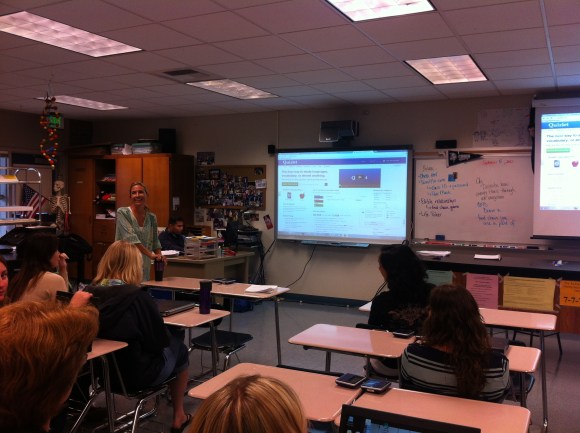
Lynbrook Tech Menu Day
Tech Menu Day at Lynbrook High School

How do you spot a teacherpreneur? They are the secret force that will lead to true educational reform, yet very little attention is paid to these important agents of change.

As we rethink the future of education much of the buzz, especially in edtech, is focused on the technology and tools. Very little of the conversation is about the individuals using these tech tools to transform this complex system. However, as we all make big bets on what is going to improve teaching and learning for all students, a significant factor will be how the role of educators will evolve and adapt to match the energy of new learning environments and methodologies.

So who are we talking about, exactly? The teachers on the front lines in the classroom who are looking for online tools to help with their math lessons? Or the tech coordinators and specialists who help decide which ones to use? Or those who, after many frustrating years in the classroom, decide to take it upon themselves to build the tools that they wish existed? And what about the librarian?

MindShift’s Tina Barseghian wrote a great post back in 2011 asking the very same question: “What the Heck is a Teacherpreneur?” Barnett Berry, who founded the Center for Teaching Quality and was one of the first to use the term “teacherpreneur,” has a book out later this summer,Teacherpreneurs: Innovative Teachers Who Lead But Don’t Leave, that focuses specifically on identifying these talented educators and empowering them with opportunities to be entrepreneurial while maintaining a strong role in the classroom.

And over the past few years I’ve met some incredibly inspiring ones myself. This was one of the reasons that I launched TeacherSquare, to support entrepreneurial educators and improve the resources available for them to pursue innovative approaches while working within the confines of the K-12 system. There are other similar teacherpreneur communities popping up around the country–some of which you may have heard about already on EdSurge, such as the Digital Harbor Foundation in Baltimore and EdUnderground in Rhode Island (which I covered in my previous post.)

Too often the conversation around education reform focuses on all that is “broken.” But I hope to shift that conversation by celebrating positive change that local educators are cultivating in their own communities. In this series, we’ll explore profiles of teacherpreneurs who are actively taking matters into their own hands, and showcase their talents and energy to encourage others to join the mix.

Keep an eye out for our first profile in the coming weeks and maybe you’ll discover the teacherpreneur in you!

Categories
Blended Learning Tech in the classroom

#EdUnderground: Finding your Herd

EdUnderground_Nov2012_59

As I continue to grow the TeacherSquare community, I’ve been inspired to find other local efforts around the country that are bringing together innovative educators to deepen their knowledge and comfort with using technology to change teaching and learning. One such organization is the EdUnderground, a group of ~20 educators in Rhode Island who have come together to learn from and inspire each other. As the co-founder, Shawn Rubin describes, “we are group of wild horses looking for our herd, feeling a lack of exploration and innovation in our existing school cultures.”

Rubin, Director of Technology Integration at Highlander Institute, is exactly one of those wild horses who has always been “looking for ways to do transformative things inside and outside the classroom,” and is cultivating that spirit of tinkering through the EdUnderground community. “I see the EdUnderound as equal parts edCamp + Apple Store + Fab Lab. A space where there are crazy-inspiring tools, with a balance between being polished while still encouraging tinkering and knowledge sharing.” Through his role at the Highlander Institute, he realized he had this unique acces to hardware and software tools to stimulate that tinkering and invited 7-8 educators to join him. Fueled by some Rhode Island state grants to support PLCs (professional learning communities) this group quickly doubled and is continuing to grow, with geography playing a role in that growth as well.

Being a small state with 11k teachers and 150k students, Rubin quickly found there were lots of ways educators were experimenting with different tools and strategies in a very small geographic area. In addition, Rubin shares that being “uniquely positioned between New York and Boston, we serve as a testing ground for those edtech ecosystems who are all incredibly interested and eager to get access to this engaged group of RI teachers.”

EdUnderground session

The group currently hosts regular meetups and workshops to share best practices and experiment with various edtech tools. Up next, Shawn is working on building a lending library of hardware and software for teachers to bring these blended learning experiments back to their schools. Shawn and his team were also just awarded a significant grant to build a Blended Learning Institute (as part of Highlander Institute) to showcase blended learning(BL) in action and create a space for educators to explore various BL methods.

As TeacherSquare evolves, I have been looking to connect our community with others, like the EdUnderground, to create a national network of entrepreneurial educators to continue their edtech explorations together through on and offline interactions. If you’re interested in getting involved or starting a similar group in your community, please feel free to reach out to Shawn (srubin@highlanderinstitute.org) or me (jasmit@gmail.com.)

Categories
Ed Reform/Policy Edu Startups Uncategorized

Connecting Silicon Valley and the Ivory Tower

Since 2005 Columbia University’s Teachers College has been quietly developing their EdLab which internally incubates some promising ideas and in their words, “engages in work that has the potential to contribute to the improvement of educational institutions today and the broader evolution and reconfiguration of future educational services.”

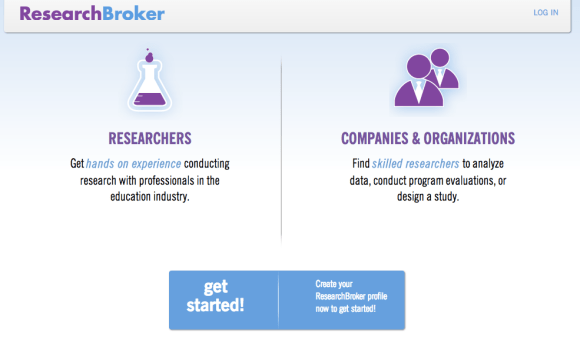
One of their projects that recently caught my attention is ResearchBroker, a tool to connect startups to skilled researchers who are passionate about validating new ideas in industry. While these efforts can be applied to multiple verticals, I think the edtech implications are extremely exciting. (Perhaps because I’m always drawn to efforts that bring together edtech founders with education practitioners in hopes that this exchange will lead to better product development and implementation.) In case you missed it, EdSurge just wrote their own profile on the product and team.

I recently spoke with Megha Agarwala and Janice Joo, Innovation Fellows at EdLab who created this tool, to learn more about their progress & vision and help engage users in the Bay Area.

What problem is ResearchBroker trying to address?

A number of educational startups are looking for researchers who can help validate product ideas and determine the effectiveness of their product for different users, including instructors, students and program administrators. The startups need researchers to identify metrics to track and collect data, design and conduct studies, analyze data and also potentially publish the results within their community.  

On the other side are Doctoral and Masters degree researchers who are looking for real-world projects where they can gain valuable experience collecting and analyzing data and also use that experience towards their academic pursuits. ResearchBroker is a free platform that has been designed to connect these two parties. Instead of waiting for introductions, startups can directly connect with researchers by creating their research projects on ResearchBroker.

ResearchBrokerHomepage

What has been the response from early users? What are you looking for from your next set of users?

So far, users on ResearchBroker are educational startups in New York City and researchers at Teachers College Columbia University. Startups have shown a commitment to using the ResearchBroker platform to define their projects and bring a researcher onto their team. EdLab has been offering guidance to startups on how to define their research questions, and will create learning resources to help startups leverage existing research.
Because EdLab is uniquely positioned within Teachers College, we have been able to plug startups into a network of researchers. We were able to connect the founders of the language learning platform, Instreamia to a researcher and they are already discussing their research direction.
 
Moving forward, we would like to expand beyond the New York City tri-state area to include Silicon Valley educational startups and researchers at schools beyond Teachers College.  We would also like to organize events to bring researchers, startups, teachers and learners together to brainstorm and solve research problems and share their work.

How can people learn more or share feedback?

Please feel free to contact us directly at researchbroker@tc.columbia.edu if you have any further questions.

Categories
Edu Startups Entrepreneurship Tech in the classroom

RemixEd: Teacherpreneurs in Action

CurtisHeadShot

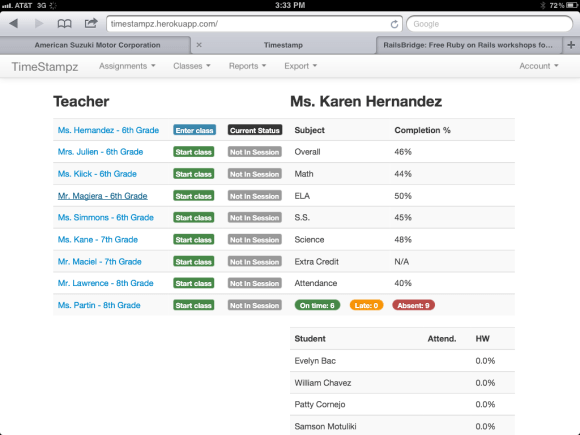
I recently got a chance to reconnect with Curtis Monette, Deputy Campus Director and  Technology Lead at the Citizen Schools campus in East Palo Alto, who was one of the educators who attended my first RemixEd event back in August 2012. Curtis and his team created TimeStampz, a tool that helps streamline communication between school day and after school educators, and took home the “Best Tool for Teachers” prize. Since then, Curtis and the TimeStampz team have been testing and refining the product with the 13 educators and 150 students at Cesar Chavez Academy. I spoke with Curtis to see how things have been progressing over the past ~6 months.

What is TimeStampz?

Timestampz allows teachers and staff to efficiently track attendance for students in our program, as well as their progress towards homework completion for the day.  It allows us a administrators and teachers to look at trends in attendance and homework completion by student, by class, and by grade level at any given point in time without having to actually go into the the class room. This helps us be more efficient with observations and feedback for both students and teachers on our campus.  The first shift teachers are also able to input homework for their students and see their progress.

What was your experience at RemixEd?

I had been thinking about this communication and tracking problem many of us faced at Citizen Schools for a while and was excited to pitch the idea for TimeStampz at RemixEd. Attending that event gave me the opportunity to meet a few developers who were in the final weeks of the DevBootCamp program and were looking for new project to work on. Our combined energy and skill sets were exactly what I needed to begin building this product. By the time the school year started it was ready to test out, so we started using it with the students and educators.

What has it been like sharing that experience and this product with the educators in your community?

The teachers are happy because they can easily assign homework ahead of time, streamlining that communication that populates out to all the students. Students like that all their assignments are in one location.  While I mainly use it on my iOS devices, we intentionally designed a web-based product, which is device agnostic, so that we can share it with all the teachers and students in our community.  It is currently only being used within the Citizen Schools network, however, I have received interest from other after-school/out-of-school time programs but need to think through sustainability before scaling to other providers.

Where do you want to see it go from here? What support do you need to get you there?

Working on TimeStampz has inspired me to learn more about other platforms and programming languages. What would be most helpful is having access to other people and resources, especially mentoring and financial support to test it out while staying in the classroom. TimeStampz is a fully volunteer run endeavor right now with each of us balancing this on the side of our full time jobs. However, we are extremely inspired by this work and would love to have more energy and resources to devote to it.

TimeStampzScreenshot

—–

It has been exciting to see the continuous energy from our first RemixEd event and hear directly from educators on how they were impacted by this unique experience to connect with developers and designers to prototype their vision. There are several similar efforts to empower and connect educators and hackers:

  • 4.0 Bay Area Lab Cohort: An effort to extend their successful flagship program from New Orleans to the Bay Area
  • SLC, backed by Gates Fdn, has hosted several Camps (edu codeathons) across the country. Their first Bay Area event took place a couple weeks ago and future camps will take place in North Carolina and Austin, TX @ SXSW Edu.
  • Startup Weekend Edu helped launch this trend, hosting their first education focused events back in Summer/Fall 2011.
  • There are also several events geared more towards students, like Hack the Future, whose next event is April 20, 2013 at the Computer History Museum in Mountain View.

TeacherSquare is in the process of planning additional RemixEd events this year throughout the Bay Area, so keep your eyes open for that news as well as additional teacherpreneur spotlights like this.

Categories
Blended Learning Tech in the classroom

Space Matters: Creating a Tinkering Lab for Education

IMG_3492

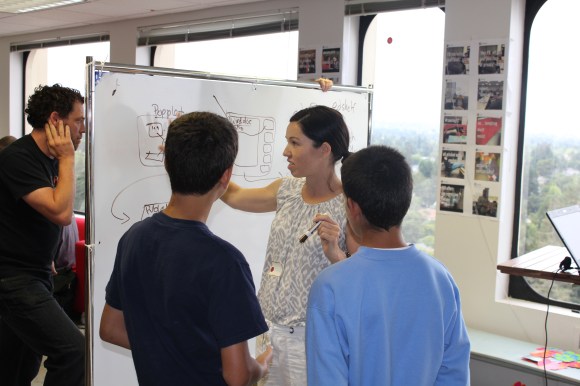
One of my current projects is a partnership between TeacherSquare and the San Jose Tech Museum to create a still-to-be-named tinkering lab for education. The goal is to create a cutting edge space that matches the energy and enthusiasm of the edtech startup world, with a specific focus on empowering educators and school leaders to understand the trends and tools, and offer clear systems to support thoughtful technology integration. The energy behind this work is based on supporting tech integration that specifically impacts learning. (If you have time, this somewhat lengthy post from one of the founders of the Digital Harbor Foundation outlines some reasons why we’ve just barely begun “to scratch the surface when it comes to education in the era of the Internet.”)

The growing buzz around education technology has led to a boom in the number of edtech companies launching products designed to help improve teaching, learning and frankly how we ‘do school.’  While these efforts are incredibly promising on multiple levels, it has created a new gap in the education space- the information and implementation gap. Millions of dollars are being invested in the creation of new edtech companies/tools as well as supporting those entrepreneurs; however, very little resources (read time, energy & money) are focused on how to effectively integrate these new tools into current learning environments.

Creating a tinkering lab for education is not a new idea, and frankly with all the activity in the education space in the Bay Area I’m surprised we don’t already have more spaces to support experimentation around implementation that are specifically optimized for the educator perspective. A place where startups can conduct focus groups with teachers and demo their products, tech directors can host PD sessions for their teams, educator incubator programs can facilitate their design thinking workshops, community members can host hackathons…this list can go on and on.

Much of this work is based on existing ideas that have been floating around in education discussions for a while now. Drawing on Alex Hernandez’s idea for a Fab Lab for Education, we aim to create a highly flexible and customizable space to provide educators with the environment and resources to prototype and “try amazing, new ideas without ‘re-tooling’ a whole school.” (You can read more about how schools are rethinking designing their learning spaces on this School Design 101: Space Learnist board.)

A recent op-ed piece on EdSurge from Wikispaces co-founder on How to Succeed in Education Technology captured what’s driving these efforts, stating that “when you empower teachers to use technology effectively, it magnifies the impact they can have on their students.” Currently much of the experimenting with education technology is taking place within charter schools, because they have flexibility to create cultures of experimentation. This project seeks to extend that culture of exploration and experimentation to traditional public schools by providing educators a delightful and engaging space to test ideas as well as a connected community for ongoing support and learning.

TeacherSquare is prototyping this work in San Jose and I plan to document all our learnings so we can bring this experience to other regions. I’d love to hear from you, the edu community, on this topic. What would you most like to see from this community and physical space? What would be most beneficial to support educators?

If you’re interested in getting involved in this work, please let me know.

Categories
Conferences/Events Tech in the classroom

Plugging Edtech into Schools

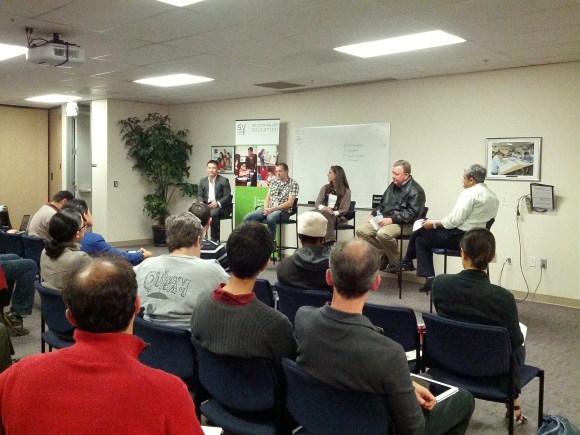
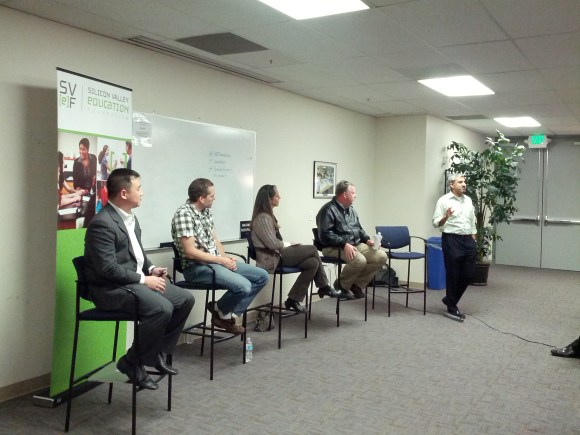
TeacherSquare partnered with Silicon Valley Education Foundation (SVEF) to bring November’s SF Edtech meetup to the San Jose. True to form, it was a fabulous gathering of teachers, technologists, education enthusiasts and supporters. I was particularly excited to support this event, not only because I’m a South Bay resident and am so pleased to see this meetup expanding to other regions of the Bay Area, but more so because I’m passionate about expanding the conversation in the edtech space beyond tools and entrepreneurs, to really focus on teachers and school leaders, who are at the heart of education change.

Muhammed Chaudhry, CEO of SVEF, moderated a really thoughtful conversation between our panelists of local school representatives to highlight the challenges at the core of making this edtech movement a real revolution. The panelists were:

  • Chin Song: Director of Technology at Milpitas Unified School District
  • Bruce Neff: Technology Curriculum Specialist at Oak Grove School District
  • Mariana Garcia: Science Teacher, AdVENTURE STEM Program at Herman Intermediate School (Oak Grove School District)
  • Randy Phelps: Director of Information Technology Services at East Side Union High School District

I storified some tweets for anyone who wants to see quick highlights and some of the questions that came from the audience.
The core of the conversation was framed around  connectivity challenges, mainly around these 3 aspects: 1) infrastructure 2) devices and 3) tools and support.

Bruce Neff from Oak Grove shared that their “goal is to have a wireless access point in each classroom,” which is still a ways off. All the talk of connectivity made me think of efforts like the Education Superhighway, which is trying to bring national awareness to the lack of broadband in schools and how that is an essential element for creating the classrooms of the future that we all fantasize about.

Beyond connectivity, the audience was very interested in hearing more about the complex procurement process in districts and if there are any strategies to navigate that system, especially for smaller startups with shorter runways. The panel shared that for the most part, hardware decisions are made at the district level to enable discounts for buying in bulk while software decisions are made at the school level, and school boards only get involved when it’s a much larger purchase. Chin Song from Milpitas Unified shared his basic rubric for evaluating educational software; does it does it fundamentally change the teaching and learning environment, impact student learning and offer easy access to the data. In response to assessing free tools he also added that-

“We look at it as a VC… is this built to last? Would we recommend this to other districts?”
This is particularly interesting when you consider the growing number of consumer-oriented edtech startups offering their tools for free and exploring freemium business models.The conversation also addressed the anticipation around common core and how everyone is hopeful it will lead to better forms of ongoing assessment as well as the buzz vs. reality of flipped vs. blended learning, to which Randy Phelps replied, “it’s all still pretty much buzz.”

In closing, the panel was asked to share their dream app or what they most want to see from the edtech community. The common response was to remember that the student is the ultimate client, and technology approaches should be appealing for students and engage them in their own learning process. I appreciated Chin’s addition that even as we explore getting more/better technology in schools, “we want to minimize the time that kids are online, in front of a screen, at school” and must focus on character development and social/emotional learning. His comment that “I don’t want (kids) hooked on badges, creating a token economy” reminded me of a LearnBoost blog post from last year on 3 reasons not to gamify education.

It is so refreshing to attend an edtech event where school leaders are at the heart of the discussion, sharing their perspective on the realities of utilizing technology to improve education for all students. Muhammed closed the night with a thoughtful Bay Area based request for this growing community to not just think about students who live off 280, but to also remember the kids and communities off 101.

TeacherSquare plans to continue this effort to host future SF Edtech Meetups in San Jose in the coming year and we are already identifying teachers to serve as panelists and share their insights on how they are bringing edtech tools to their schools. If you know a teacher who would like to participate or you would like to get involved, please contact me (jessie (at) TeacherSquare.org.)
Categories
Blended Learning Conferences/Events PBL (Project-Based Learning) Tech in the classroom

Education: Thinking Beyond School

Seth Godin recently gave a thought-provoking TED talk that has been making its way across the web. He explains how the current school system, which hasn’t changed much since the Industrial Revolution, is optimized for generating interchangeable units of people, and is “the thing we built to indoctrinate them into obedience.” Godin pushes us all to ask, what is school for?

Inspirational talks like this get me fired up about my own work to help improve education, redesigning the future of teaching and learning to rethink what is possible in schools and communities. Here is another great short film, also featuring Seth Godin, that celebrates the potential of how technology will revolutionize education. (Note that this one is focuses more on specific mobile tech solutions as it was produced by Ericsson.)

While these videos definitely help bring awareness and energy to modern education reform efforts, I often feel that they skip over two very important aspects at the root of why there is such education inequality in the US: motivation and culture.

We’ve all heard the rationale behind the current school system’s batch-processing model designed for military and/or factory based models to create many of the same type of person/consumer. This message is not new. We know this model doesn’t align with our growing emphasis on innovation, creativity and entrepreneurship. So, let’s assume for a minute that we actually can shift to a student-centered, project-based learning school system. Continuing this dream, let’s then assume that teachers and schools automagically have the tools and resources (money) to support this type of individualized system. Would this solve the problem?

Don’t get me wrong, I would love to get to this type of system, which I think is necessary, but I don’t believe we can have a conversation about true education reform without acknowledging what is happening outside of school. Seth is a genius and outlines an ambitious goal for all of us to ask ‘What is school really for?’ yet I wish he, and others who give talks like this (Ken Robinson, etc), would take it a step further and address the role that motivation and culture play in the learning process and how much that actually matters when we compare the US education system (mainly through test scores) to other nations.

Families and communities establish important cultural norms for kids, which directly influence their motivation and willingness to engage in school, no matter what that system looks like. We cannot talk about addressing comprehensive education solutions without talking about parents and what is happening at home and in neighborhoods.

People are motivated when they feel competent. They are motivated when they have more opportunities. I think the true role of education is to help learners discover ongoing opportunities and feel competent to pursue them. We must realize this goes beyond just what is happening in schools, and that it is our collective responsibility if we want an educated society.

Categories
Blended Learning Tech in the classroom

TeacherSquare takes Tech Talks on Air

As the TeacherSquare community continues to grow, I have been thinking about the best way to open our conversations to a larger audience. Last night we hosted our first Teacher Tech Talk on Air using Google Hangouts and despite minor tech issues on my end, we had a lively discussion on formative assessments and how some cloud-based tools are making this more of a reality in many classroom.

Thanks to Jack West (Braincandy), Tim Burke (Gooru) and Trenton Goble (Mastery Connect) for sharing their perspectives as educators and edtech entrepreneurs and leading this important discussion. Additional appreciation goes out to Andrew Coy (Digital Harbor Foundation) and Steve Taffe for their participation and for sharing their insights.

TeacherSquare plans to continue both on and offline discussions just like this so if you have any feedback or suggestions for future topics I’m all ears.

Categories
Edu Startups Entrepreneurship

Go Go Games- Live in iTunes Store

Big congratulations to Joy, Heidi and Alexis, the Stanford LDT Alumni who created Go Go Games as their masters project and just launched in the iTunes store this week.  “Go Go Games is a suite of games on the iPad that helps preschool and elementary school children to learn to notice multiple features of the objects in the world around them – a specific perceptual skill that is essential to learning and comes naturally to most children, but is known to be a common difficulty for those with ASD.”

I wrote about these efforts in general after the LDT Expo back in August and it is really exciting to see these research based education games making their way to a consumer audience. The team has even outlined the process and science behind their product development on their website.

If you know students and families that would benefit from this, please spread the word and follow them on Facebook and Twitter. Go Go LDT!

Categories
Conferences/Events Tech in the classroom

TeacherSquare On Air

For the past several months I’ve been working on my own initiative, TeacherSquare, exploring various ways that innovative educators can share their expertise and connect with each other, both on and offline, with the goal of co-creating a community to support better (& smarter) technology adoption in classrooms. One of our most successful and engaging events was our August Teacher Tech Talk at the Silicon Valley Community Foundation where Jack West (braincandy), Trenton Goble (MasteryConnect) and Tim Burke (Gooru Learning) shared their strategies on utilizing specific tools to bring formative assessment techniques to the classroom. During this interactive BYOD session participants broke into small groups to share their specific experience and best practices with each other and it was almost impossible to get the groups to stop talking when the event ended.

In thinking about how best to continue that conversation and include others from all over the world, TeacherSquare is talking it’s Tech Talks On Air via Google Hangout. Jack West will be leading our first Tech Talk on Air on Wed, Oct 24th at 7pm (PT) to share his story balancing multiple passions as an educator, edtech blogger and entrepreneur. I’m really excited to extend the energy and reach of TeacherSquare and I hope you’ll join the conversation, help spread the word and/or submit a question in advance.