Categories
Conferences/Events Ed Reform/Policy Investing in Education

Is there Really A Movement?

Howard Fuller was absolutely amazing as the keynote speaker at the New Schools Venture Fund Summit this past Wed, appropriately kicking off the event asking everyone to think about why they are here, doing this work, and what role they can and will play. He passionately expressed the sense of urgency we need to have in solving the challenges of our current education system and echoed a similar message from Don Shalvey, that I wrote in a previous post, that there is room for everyone to play a meaningful role in improving education outcomes for all students.

Many of his comments were twitter-worthy (and the audience did an impressive job keeping the tweet stream (#nsvfsummit) flowing all day) but this was by far my favorite.

“We think we are all awesome. We are not all awesome. Most of us are regular people. We have to create systems where regular people can have awesome results.”

For me, this captured the essence of the entire event. NSVF has been supporting some of the top edupreneurs since 1998, who span from school builders to tool builders and everything in between, who are working to create ways in which regular citizens can make a real impact on teaching and learning.

The title of this post borrows from that of the opening session itself, questioning whether the current education reform movement is moving fast enough. I wonder if outside our bubble of edtech trends and the charter reform, is there enough community engagement and energy to even classify this as a movement? I would love to see what happened to the environmental movement take shape in the education world, where regular citizens not only have awareness of the problem but have actionable ways in which they can make a difference. Everyone recycles and that’s awesome. Can we get everyone to volunteer at their local school or contribute to educating all our children in other every-day ways?

Fuller simply states that in order to build a movement, we must engage people on a grassroots level. I whole-heartedly agree, which is why I’ve been organizing a growing community of educators who are interested in helping build the edtech movement through my Teacher Tech Talk events. (The next one is coming up on Wed, May 30th.)

The rest of the day was equally amazing, full of great speakers and opportunities to connect with fellow edupreneurs, old and new. It would be impossible to capture everything here, so keeping with their efforts to foster this community, NSVF will post all the sessions online. (A few of the sessions are already live on NBC News Education Nation.)

If you only have time to watch one session, skip straight to the closing conversation between Rahm Emanuel and Laurene Powell Jobs. Clearly a seasoned politician, he had an established message to convey, however, his passion for fixing the broken education system in Chicago was pouring off the stage.

“We’re not for reform, we’re for results. As reformers, we’re for education excellence, not educational reform. I think we confuse the means with the ends.”

It was such a powerful way to close the day and bring the conversation back to the focus of all our efforts, and events like the summit. The focus should not be reforming “the system,” or unions, or teaching training programs, etc… But rather engaging regular citizens in building a grassroots movement that optimizes for educational excellence for all students. If we could do that, then maybe we are all awesome.
Categories
Conferences/Events Entrepreneurship Investing in Education

Imagine that!

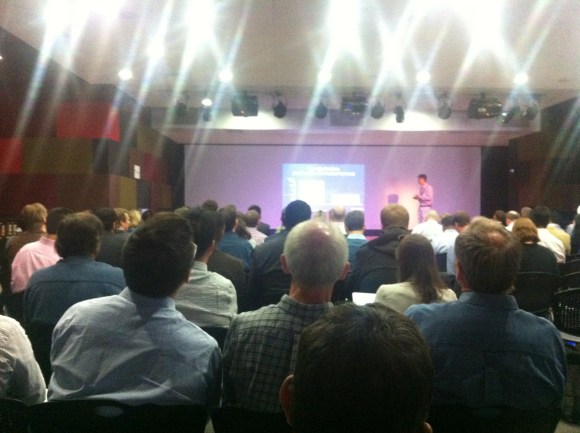
Imagine K12 hosted their Demo Day for batch #2  today and I was impressed not only with the progress of the teams but with the IK12 program itself. In true lean startup form, ImagineK12 has rapidly incorporated feedback from their first cohort, iterated on their processes and prepared 9  startups to contribute to the edtech movement.

Alan Louie kicked off the event with some statistics about the edu startup space that appropriately engaged this audience, made up largely of edtech investors. Most compelling for me is the reality that the US represents only 3% of the global edu market, which means the real opportunity is in designing and distributing tools to learners on a global scale. As the movement continues to build momentum, it is projected that US spending on education will grow to $789Billion by 2015 (just 3 short years from now.)

Compared to other Demo Days that attract an audience of hundreds of people generally interested in getting in on the startup action, Imagine K12 clearly focused on the quality and caliber of the attendees. This not only creates a more targeted pitching experience for the startups but also deepens ties in broader edtech community. I wanted to stop and meet (or re-connect) with almost every person in the room, as I know they are sincerely committed to funding entrepreneurs striving to solve real problems in the K12 space.

The leap from cohort 1 to cohort 2 was tremendous and seems like it just keeps getting better. The next batch embarks on their journey in July and  IK12 is still accepting applications through through this Sunday, May 6th.

Categories
Entrepreneurship Learning to Code

Cultivating Entrepreneurs of the Future

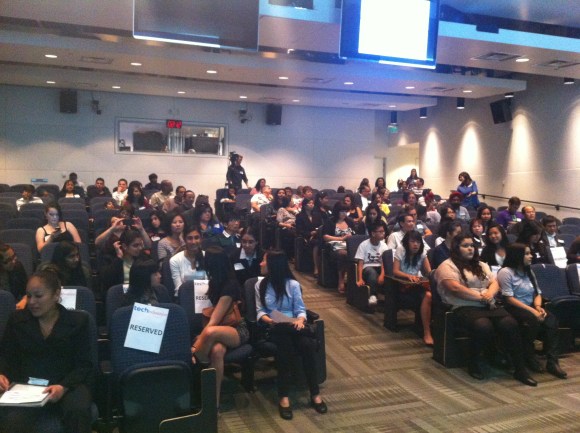
I was honored to be a judge at the Technovation Pitch Competition today at Microsoft and was truly blown away by how much the program has grown over the past 3 years. Iridescent founder, Tara Chklovski, kicked off the event by sharing some startling statistics about how 6th grade girls actually score better in STEM content areas but somehow once we get to higher ed communities in a room of ~30 engineering students, only 3 will be girls. I wish that every person who has ever talked about the lack of diversity in the startup community would have been in the room today, not only to hear these stats, but to see a program like the Technovation Challenge that is determined to change the ratio.

If only all Demo Days embodied this level of energy and authentic enthusiasm. 10 teams had 4 min each to pitch their Android App and then respond to questions from the judges. The ideas ranged from medical/healthcare apps that allow you to easily share your general medical history to food discovery apps for people with allergies or dietary restrictions (vegans) and games that teach marine biology in a fun and engaging way. The winning team from our session was an app designed to reduce teenage pregnancy and STDs by providing preventative care information in a format that is appealing and compelling for high school students.  The pitches were great, however, what was most impressive was the demonstration of what the girls had learned about what it really means to make something out of nothing. During the poster session I spoke with several of the teams who shared their experiences with customer development, co-founder disagreements, sizing the market, brainstorming distribution strategies, outlining business models and perfecting your pitch. These are the exact same topics that I discuss with startups that I work with in various incubator programs in Silicon Valley and it’s inspiring to see high schools girls learning these processes and techniques that they will hopefully carry with them as they continue their education and professional careers. This is what authentic STEM education looks like. This is what teaching entrepreneurship really means.

Towards the end of the event I was asked what I’d like to see come out of this type of program over the next several years. Ideally, if we say we want to educate our children to be the innovators of the future then I strongly believe this type of program needs to be integrated into the K12 curriculum. Shouldn’t all students have an opportunity to gain these necessary skills during the traditional school day?

The winning teams from today and the other regional challenges will come together at Intel in Santa Clara next Thurs, May 3rd for the National Pitch Competition. Tickets are free so if you’re available and are interested in seeing what empowering young girls to develop an authentic desire for coding and entrepreneurship looks like, I highly recommend you attend. Kudos to the entire Iridescent team for a fabulous event today and for empowering high school girls all over the country to design their futures.

Categories
Investing in Education

More Ed. Less Tech.

The One Laptop Per Child (OLPC) program is back in the press lately, triggered by an Economist article critique of a recent study conducted in Peru, coverage from Mashable and a thoughtful response from Audrey Watter’s Hack Education. And after overwhelming comments the members of the Peru study posted their own response as well.

So, while the launch and perceived failure of these types of programs is complex, it is clear that no one is surprised. The OLPC project is a classic example of an over-engineered product (too much tech) where little time and resources were actually devoted to the training and implementation (not enough ed.) Teams spend years designing and building the product without much thought on how to distribute and integrate these tools into the learning goals and systems. This is illustrated by Negroponte’s plan to just drop OLPCs out of a helicopter, which luckily was scrapped, but that type of distribution plan highlights all that is wrong with edtech solutions that are focused more on the tech and less on the actual education mission. I’ve have one (from the 2007 Give One, Get One program) and find myself wishing I had some training to help me understand its full potential.

While no one is surprised that the initial efforts of the program were unsuccessful, I don’t believe it’s fair to use standardized test scores to deem the entire endeavor a failure. Rather, I’d like to draw upon the popular notion amongst many valley startups that ‘failing doesn’t mean you’re a failure’ and there is a lot that OLPC and other edtech companies can learn from the past several years. Clearly, OLPC wasn’t quite a lean startup they didn’t fail fast, but they were blazing the trail for others and executing on a very ambitious vision. We should focus on the lessons learned and move on.

By disproportionately focusing on the tech and then labeling the whole effort a failure, this undermines the real role that technology can play, as a tool that improves and enables better teaching and learning, when put in the hands of trained teachers and learners. The real question we should be asking is not whether or not technology tools are needed but more so what are the best methods for integrating these types of tools into the learning environments of global communities. We know that in order to educate a global citizenry that investment in edtech tools are needed, but larger emphasis must be placed on the distribution and adoption plans if we truly want to see impact on student outcomes (and that means more than just standardized test scores.)

I still love the vision behind OLPC, as it was probably my first crush in the edtech world, and believe we will get to a place where access to devices and connectivity will no longer be an issue. However, to truly make an impact on education, from the perspective of teaching and learning, we have got to focus on more ed and less tech.

Categories
Conferences/Events Ed Reform/Policy

Outrageous to Ambitious

I’m always so impressed by the quality of the fully student organized Stanford GSB Education Symposium and last night’s event was no exception. I was honored to co-lead a roundtable discussion on how to apply design thinking principles to help empower global learners, specifically around re-thinking distribution models for digital content.  This is directly related to the course I am contributing to through the Stanford Ed School this spring, Ed333B: Envisioning the Future of Learning, and it was so beneficial for me to practice some of my instructional approaches with this attentive and energetic audience.

The roundtables were followed by some additional networking and a lovely dinner. The highlight of the evening was the charming and inspiring keynote address from Don Shalvey, Founder of Aspire Public Schools who is currently Director of US Ed Programs for the Gates Foundation. As the godfather of the charter school movement, he shared some entertaining stories about his first time teaching kindergarten and how his teaching craft has evolved over time, with a focus on ‘doing the common thing uncommonly well.’ While I’m not particularly bullish on charter schools as the silver bullet for ed reform, what was most fascinating is his perspective on the ~20 year old charter school movement itself and his key message that what used to be seen as outrageous is now viewed as ambitious. What was previously dismissed as impossible is actually now attainable, once you apply enough energy and investment. While charters are still such a small percentage of schools (~5-7%) they play the important role as a testing ground for piloting programs and iterating before integrating broadly into traditional schools. The innovative and fast-paced culture of some charter schools allow them to experiment with tools and programs that larger, and often more bureaucratic districts, struggle with. The most inspiring part of his address was his call to action for everyone in the room to remember that ‘education is a broad field and there is room and need for talent from all types of backgrounds.’

In a space that is often dominated by negative rhetoric about how the system is failing and in crisis mode, Dean Steele’s opening remarks and Dr. Shalvey’s keynote were refreshingly optimistic and I hope everyone else left with the same reinvigorating feeling that I did!

Categories
Blended Learning

Early Stages of Disrupting Higher Ed

On my morning run today I had a chance to listen to this recent KQED Forum session with Sebastian Thrun (Udacity), Sal Khan (Khan Academy) and Anant Agarawal (MITx) sharing their thoughts and contributions to online learning.

The conversation opened with Ben Nelson sharing his plans for the Minerva Project, to offer an elite level university education fully online. He recently raised $25M in seed funding to address the issue that the demand for an ivy league style education vastly outstrips the supply and I wish he would’ve shared more of his perspective since he plans to charge students while the other 3 panelists offer their services for free.

It was an interesting discussion where the panelists clearly acknowledged that while their online courses have made a significant impact we are just in the beginning stages of figuring out the best way to deliver and measure online learning where the role of community and 1:1 interaction is still vitally important. In response to how the cost of a higher ed degree is rapidly increasing while its value as a signal of quality and ability to provide job security is decreasing, I appreciated Sal’s comment that we must deconstruct the key aspects of college: learning, credentialing and socializing in order to control quality and costs. There is huge value in each and we must optimize the delivery methods accordingly. Sebastian and Anant shared some valuable examples of how their students have organized both physical and virtual communities to support each other’s learning and how these new models for study groups reflect the teamwork and collaboration we should expect to see more of in the future workforce.

I am so pleased to see conversations like this taking place that go beyond simply bringing content online and are addressing the more complex issue of how to facilitate learning, maintain student engagement and foster community and peer interactions in an online environment. While the discussion was focused on higher education I think, as Khan Academy has demonstrated, this work has broader implications for learning at all levels.

Categories
Uncategorized

My continuing education

I’ve been on vacation and am pleasantly surprised with how much I have actually been able to unplug from my online life. (Hence the absence of a post or many tweets lately!) It’s always such a treat to getaway and spend quality time with family, however, especially in recent years the distance traveled that impacts my vacation the most is the one between me and my laptop. While I mostly focus on education startups, another purpose of this blog is my own ongoing education and insights I’ve picked up along the way.  So, with that I’ll keep this brief and just wanted to share a lovely quote that I came across while lounging by the pool that deeply resonated with me.

What surprises you most about getting older?

“I am surprised to find how much happier I am with life. With age comes a deep acceptance and appreciation of self. Instead of focusing on what I don’t have in life, I find myself feeling a great sense of satisfaction with what is. I no longer worry so much about what other people will think, or obsess about details that won’t matter in five years. My career has flourished, my home life is happy, and friendships are more genuine and lasting.”

Categories
Entrepreneurship Investing in Education

Teachers as Innovators

I occasionally have moments on my morning drive where I’m so captivated by the conversation on NPR that I spend a few extra minutes just sitting and listening. This happened to me on Tuesday while listening to the Forum segment with The Economist’s Vijay Vaitheeswaran talking about his latest book, “Need, Speed, and Greed.” His broader message is that risk-taking innovation is the only way for companies and entrepreneurs to survive in a disruptive era of globalization and I was particularly drawn into his points on how education plays such a vital role in innovation. Vijay defines innovation as ‘fresh thinking that adds/creates value’ and I really appreciate his emphasis on how innovation is not always related to or dependent on technology.  In applying this to education, this immediately made me think about a recent EdWeek article highlighting a study that shows ‘Teachers Can Influence Colleagues, Change Schools.’ If more teachers see themselves as the innovators, tasked with the challenge of determining how/when to utilize various edtech tools (which is far more difficult than just creating them), that will drive significant improvements in teaching and learning. My favorite message from that piece is that  “Educators must consider each other the most valuable resource in a system, to be developed and supported with leadership, structures, tools, and processes for promoting continual professional learning.” I believe that the value created from focusing on teachers as innovators and constant learners themselves is the true revolution that schools need in order to improve student outcomes.

He went on to stress the importance of investing in education, which is one of the main drivers of innovation and that recent cuts to higher ed, especially to the UC system, are fundamentally wrong as we are cutting future productivity gains. Vijay’s views on purpose really resonated with me and were the main reason I came back and listened to the rest of the segment. He shares that in an ideas based economy, what truly motivates people is “purpose,  a sense of community, autonomy, mastery, independence, being good at what you do and connecting with something bigger than yourself.” If you know me or have read previous posts, you’ll know how much I whole-heartedly agree with this sentiment.

I find his optimistic perspective extremely refreshing in a conversation around poverty alleviation and education that is often portrayed as in crisis-mode. He asserts that change is possible and disruptive change is coming (with a nice shout-out to Khan Academy and Acumen Fund.) I agree and am enthusiastically hopeful to see what we as a society can create when we focus on greed for good.

Categories
Blended Learning Tech in the classroom

A Deeper Look- Blended Learning at DCP

Last fall I was fortunate to meet Greg Klein, Director of Blended Learning at Downtown College Prep in San Jose, and got a chance to see one of the few truly blended learning schools in the Bay Area. Greg manages his lab as a startup, piloting a variety of software programs giving himself and his students a chance to test it all out before integrating it fully into their workflow. As the first guest speaker at my Teacher Tech Talk event, Greg gave us all a deeper look into the tools he uses and some of the key decisions he’s made to cultivate an engaging and highly academic blended learning environment.

It helps to start with a deeper understanding of the student population. Downtown College Prep (DCP) in Alum Rock is located in one of the lowest income communities in San Jose. Greg’s campus serves 180 students (6th and 7th graders) of which 89% are on free/reduced lunch, however, 2/3 of the students d0 have access to internet at home. 60 students at a time spend 90 min/day in the learning lab going through 3 30-min rotations. The computers are setup in rows with a simple system of using red/green plastic cups to identify student progress and who may need some additional support.  Greg went on to share the pretty comprehensive list of tools he uses to structure the content and delivery during those rotation sessions.

Greg and the DCP Team are currently experimenting with these products in the following areas, although many of them can be used in other content areas, too.

Math: Khan Academy*, Manga High**, ST Math***, PLATO, SuccessMaker
ELA: TeenBiz3000*, AcademicMerit*, Quizlet***, TypingWeb
Communication: Edmodo***, Goalbook*, Google Docs***
(* indicate Greg’s enthusiasm for these different products)

A student and instructor favorite, Quizlet, is in the process of launching a beta version of  a new product, Sentencer, that allows kids to collaboratively create sentences and then vote up/down their writings. One of the obvious gaps was software tools to support science instruction and project-based learning (PBL,) and DCP currently uses Google Docs through Edmodo to deliver lesson plans that the teachers themselves created.

In generating this list during the discussion, a teacher made an interesting point wondering if students then had 11 different logins to manage these systems? While a Google Apps login is shared across a few of the tools, there are still several different logins that students have to remember and enter on a daily basis. This tied directly into an early suggestion on the need for unification of tools/systems to make it easier for students and teachers to use and access data from these different platforms.

Special thanks to Greg for being our first guest speaker and sharing these insights from the blended learning environment he’s creating at DCP. Keep an eye out for similar deep-dives as I plan to connect with the blended learning folks at SF Flex Academy and Rocketship sometime soon.

Categories
Conferences/Events Ed Reform/Policy Tech in the classroom

Teacher Tech Talk

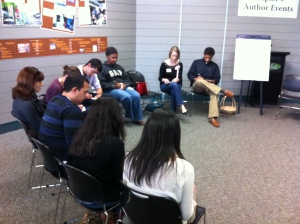
During my exploration deeper into the world of edtech, meeting with countless entrepreneurs & investors and attending numerous conferences & events, I feel a very important perspective is missing from this growing movement… the voice and participation of educators. Can we really redesign and distribute new innovations in teaching and learning without active involvement from the teacher community? I’ve been to several edtech meetups, Startup Weekend EDU events and conferences and it’s rare to find attendees that are actually current teachers, working directly with students and trying out the new tools that seem to pop up weekly.

So, what can we do about that? Last night I hosted the first Teacher Tech Talk event to help identify and build a community of educators that are interested in playing a more vocal and active role  in this growing edtech movement. It’s been hard to miss all the buzz around the ‘edtech’ world lately, however, people who have been thinking about ed reform for a while recognize that technology is merely a tool and the larger disruptions and improvements to current teaching and learning practices depend on when/how those tools are used, which is  largely driven by educators.

My goal for this community is to collectively figure out how best to bridge the educator and education startup worlds. How can we get more perspective from what is happening in classrooms and schools into the product development process of startups, rather than when it’s time to find beta testers or product evangelists? The group consisted of current and former educators, entrepreneurs, school/district tech leads and even an investor. The diversity of perspectives lead to a very insightful discussion session, and as this community grows I imagine it will attract more entrepreneurs and investors, however, I’m extremely focused on keeping the content and conversation centered on educators.

After some networking, we settled into a brainstorming and discussion session around what the educators think would make their teaching lives easier. The responses ranged from predictable need for more time, access to devices, actionable data to more collective impact approaches, engaging parents, inter/intra district collaboration and thinking how to bring more relevancy and real-world application to the current standards-based curriculum. Greg Klein was our first guest speaker, invited to share his perspective as a former principal in Oakland and current teacher, leading the blended learning initiatives at Downtown College Prep. He shared an in-depth look into the tools (Khan Academy, Manga High and long list of others) and process he’s piloting at DCP and stay tuned for a follow-up post that goes into more detail. Brett Kopf, co-founder of Remind101, then shared his experience incubating his startup through Imaginek12 and speaking with hundreds of teachers before starting to build his product that aims to power communication between teachers, parents and students.

This pilot event was a success and surfaced some extremely useful feedback on how to grow and shape this community going forward. Look out for an invite to next month’s event and if you’re interested in getting involved in anyway, let me know. As with most startups, I’m figuring this out as I go and can use all the feedback I can get!