Last night I began my first Coursera MOOC (massively open online course) entitled Blended Learning: Personalizing Education for Students, taught by some of the key folks who are driving this movement. I watched the four short videos for this week, participated in the quizzes and poked around in several of the already active discussion forums. The first homework assignment (which I haven’t done yet, don’t judge me) is to post your own definition of blended learning. While it would be premature to make any meaningful assessment about this particular course, I’m struck by how much of the conversation around blended learning for students is about personalization, self-paced instruction with some component of creating/making, while much of the professional development I’ve seen for educators is not. While MOOCs have a certain appeal to some, if you don’t learn well from watching video lectures, then you’re pretty much out of luck as self-paced is not the same as personalization.
Kudos to Nick DiNardo, member of the Pearson Online Learning team, on launching the Meet Education Project. This podcast series showcases educators and edtech innovators from around the country and I’m honored he invited me to share my experiences building bridges in the edtech community through TeacherSquare. In our ~30 min chat we discuss the edtech ecosystem in the Bay Area and beyond, highlighting some of my favorite players Imagine K12, 4.0 Schools, EdTechRI and more.

While podcasts may seem dated, I am actually a fan and find they are a great way to directly hear from some of the thought leaders in this space. My favorite is Audrey Watters’s Hack Education series with Steve Hargadon, which I hope they’ll bring back sometime soon. (Their most recent one is from Feb 11, 2013.) I put one on during a run and find it’s a great way to learn from others doing inspiring work in education. If you have any feedback for Nick or me, send it our way.
India’s education technology industry is poised for explosive growth over the next few years. Over the past 20 years, India has enjoyed an annual average GDP growth rate of 5.8%. Although recent months have seen a slowdown, analysts estimate a growth increase of up to 7.5% within a year. The mobile industry is slated to be the second largest market by 2016, and half of its 1.2 billion people are under the age of 25.
So if you want to make an impact in education at scale, India is the the place to be. Just ask serial entrepreneur John Danner, who co-founded Rocketship Education and devoted a 4-part series on his blog outlining the insights from his travels there last winter.
While the opportunities seem exciting, there are many challenges in connecting Indian startups with investors around the world. Enter Perspectful, a newly launched advisory firm that helps investors make more meaningful and effective edtech investments. I recently caught up with one of the founders, Shabnam Aggarwal, to learn more about her take on the Indian education ecosystem.
What drew you to working in education in India?
I am a Bay Area native, and after studying electrical and computer engineering at Carnegie Mellon and working stateside, I realized there were more opportunities to make an impact abroad. In 2008 I moved to Cambodia to dive into the world of social impact. A year later I moved to India to work with a professor from Carnegie Mellon to build English games on low-cost mobile phones for children in rural areas.
This is when I became obsessed with the potential of technology to make an impact on student learning. In April 2012 I joined Pearson in India as the Head of Strategic Partnerships, where I spent a year working with local edtech entrepreneurs to determine how Pearson could support their work. During that time I crossed paths with Josh Engel, who became my co-founder.
What is the problem that you’re trying to solve?
Perspectful wants to channel more investment dollars to promising entrepreneurs in India by enabling more risk-tolerant foreign investors to enter the market and make an impact. Our efforts are focused on 3 core areas:
-
Sourcing: Identify education ventures that increase access and offer high quality learning opportunities
-
Diligence: Align and mobilize capital
-
Mentorship: Provide assistance to entrepreneurs on content, team, product, processes and technology
What are the challenges for edtech investors in India?
One of the biggest problems is finding the right entrepreneurs that meet their investment philosophy and are at the right stage for funding. Through numerous conversations with investors who were curious about the Indian edtech market, a common concern was being able to identify and support the right entrepreneurs, given their limited travel to this region. And even after the investment, support for entrepreneurs require more hands-on attention that can’t come from Silicon Valley.
From our research, there are hundreds of investors for whom “education in India” is a portfolio they’d like to pursue over the next five years. We’ve personally spoken with at least 50 of them, with a good majority looking to make investments this year.
The most well-known education investment firm in India is Sandeep Aneja’s Kaizen, which focuses on later stage ventures to mitigate risk. The latest philanthropic fund is Ashish Dhawan’s Central Square Foundation, which solely focuses on nonprofit ventures. These two firms are just the tip of the iceberg when you think about the increase in VC investments and actual dollars going into education over the past decade.
The edtech ecosystem is just starting to develop. There have been a few social entrepreneurship pitchfests, and Pearson’s Affordable Learning Fund, in partnership with Village Capital, just kicked off the first education-focused incubator.
What is one of your current projects?
In April 2013, Atlanta-based Gray Ghost Ventures First Light Fund invested in Sudiksha to build a chain of affordable private preschools. They then decided to hire us to help scale that model to support another 50+ schools. Building, recruiting and creating processes for that type of growth is a daunting task, so Josh is in Hyderabad right now working with that team.
What do you feel are the main challenges to the effective adoption of education technologies in India?
India’s education technology ecosystem today is where the U.S. was about 15 years ago. We don’t have centralized systems for teachers and educators to connect, streamline systems and share best practices.
In terms of actual tech adoption, the challenges aren’t that different from any other region in the world. Currently, almost all the attention is focused on hardware sales–mainly Android tablets/phones–and there is very little software or programmatic support to ensure effective implementation. There is huge potential for products on the Android platform for teachers, parents, administrators to manage and improve learning outcomes.
Which edtech companies have caught your attention out there?
TutorVista is heralded as the darling of edtech in India. It was one of the first Indian edtech companies to expand services to U.S. and Europe, and in 2009 was acquired by Pearson for $127 million. This acquisition also included the subsidiary company, Edurite, a school management company that provides private schools with services to revamp infrastructure, technology, and teacher training.
On the flip side, all the buzz and growth potential don’t always lead to positive outcomes. The case in example is Educomp, which went public in 2006 but has spent the last 5 years in a downward spiral. Despite the fact that the adoption numbers for its most touted edtech product, Smart Class, grew from 100 to 6,550 schools in 2012, net profit margins have fallen 61% in the last four years. The stock has fallen 91% over the last three years. This has created quite a few disgruntled schools, parents–and investors.
What we’re seeing today are smaller efforts targeted at parents-as-payers, such as after-school tutoring products, informal “educational” (often used more for marketing than actual learning) gaming apps and test prep for IIT entrance exams.
Lastly, where exactly do you see the brightest spots for innovation in edtech in India?
The areas that excite me most from an entrepreneurial perspective are the unregulated markets: preschools (a $2 billion market projected to grow at an annual rate of 40-45%), supplemental tools for K-12 classrooms, tutoring, assessments and test prep.
Over the next few years, I think we will see services that empower students to play a more active role in their learning process. We will see more and more students in India gaining access, via mobile devices, to tools like Coursera and Khan Academy that are better tailored to the Indian culture and context.
It’s an insanely exciting time to be at the front line with such innovative entrepreneurs. I’m meeting entrepreneurs who are able to put adaptive learning tools in the hands of poor children at just $2/month. And companies such as FunToot can show a 20% improvement on learning outcomes at that cost. I don’t know anywhere else in the world you can achieve that kind of cost-benefit ratio in education for the poor.
Learn more about Shabnam and follow her on Twitter @shubbless.
This article also appeared on EdSurge.
It’s been a while since I’ve posted anything as I’ve spent the past couple months enjoying time at home after the birth of my second daughter. However, I decided to venture out last week to check out the masters projects from this year’s Learning, Design and Technology (LDT) cohort. Every August Stanford hosts their LDT Expo and I’m increasingly impressed with the level of sophistication of the event as well as the ways in which the students approach their learning challenges and solutions. Last year I had the honor of attending as one of the reviewers so I had the chance to get a deeper look into many of the projects. This year I just saw the teams at expo and it was interesting to see that none of the teams chose to tackle a traditional K12 topic, but rather focused more on informal learning.

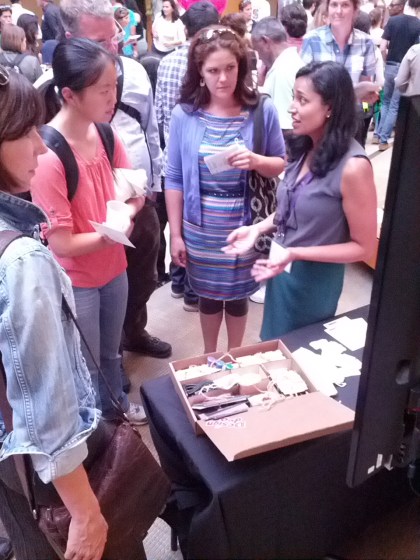
I was particularly motivated to attend to see DesignDuo, a DIY toolkit designed to get dads and daughters to build things together to drive engagement and interest in STEM, which was created by a friend of mine. You can read about all 12 of the projects in this nice overview piece from EdSurge. It was also great (for both the LDT Program and the Stanford School of Education) to see this press coverage (~2min video) from ABC Local News. I hope all these teams will continue this work in some way and am curious if any will launch this as a real product.
Teacherpreneur Communities
One of the best aspects of building TeacherSquare over the past year has been meeting dynamic educators and school leaders from teacherpreneur communities across the country. I’ve created this list to highlight the ones that I have been inspired by and have connected with directly. I’ve also included Twitter handles and hashtags so you can join the conversation and connect with them yourself.
-
Center for Teaching Quality (CTQ): A research-based advocacy group that seeks to further the role and impact of teacherpreneurs. CTQ Collaboratory is an incubator for teachers’ bold ideas and innovative solutions and they also welcome all who value teachers as leaders in the classroom and beyond. Anyone can sign up (check out my profile) and begin virtually collaborating with teacherpreneurs around the world. (@TeachingQuality)
-
EdUnderground: Bringing together education technology pioneers and early adopters from various districts across the state of Rhode Island in partnership with the Business Innovation Factory (BIF) to explore technology models, approaches and solutions to enhance student achievement. Lead by Shawn Rubin, Director of Tech at Highlander Institute and founder of MyMetryx, their group conducts regular Meetups and Twitter chats (#EdUnderground and #EdchatRI.)
-
4.0 Schools: Matt Candler and team are building a community of curious people committed to unprecedented innovation in education and are at the heart of the education ecosystem in New Orleans. 4.0 engages a diverse group of innovators through variety of program offerings- Essentials (one-day/weekend workshops) as well as a virtual and in-house accelerator programs. (@4pt0Schools)
- Stanford d.school K12 Lab: This group recently relaunched with some exciting on and offline efforts to support teacherpreneurs in the Bay Area and beyond. They just closed their application process for the fellowship program they will be hosting this upcoming school year (AY 13-14) and are launching 2.0 versions of @projectbreaker and @sparktruck experiences in June. (@K12Lab)
-
Digital Harbor Foundation: Fosters innovation, tech advancement, and entrepreneurship through educational initiatives in their hometown of Baltimore and beyond, with a focus on digital literacy, maker activities, and tech workforce development. Director Andrew Coy also supports the regular Baltimore EdTech Meetup events to connect with local educators and technologists. (@DHFBaltimore.) An Estuary is a newly developed (for-profit) spin-off from the DHF focused on “leveraging mobile-first tech, data and collaboration to improve professional development.”
-
LearnLaunch: Seeks to expand the education ecosystem in the New England area. They offer classes, peer group learning, conferences, networking opportunities and other educational services to individuals and organizations seeking to work with educators, students and families to enable the growth and success of the learning ecosystem. Their first accelerator class, LearnLaunchX, will begin in June 2013. (@LearnLaunch)
- EdSeeds: An educator-focused incubator program that is designed to encourage innovation in Colorado’s K-12 schools by providing a platform to help educators solve specific classroom challenges in novel ways. (@EdSeeds)
- EdLab: research, design, and development unit at Teachers College, Columbia University that hosts a variety of seminars and seeks to connect the education, technology and research communities. Their publication, the New Learning Times (NLT), provides daily coverage of the transformation of learning opportunities in the information age for those shaping the future of education, including profiles of various education leaders. (@EdLabTC)
- Silicon Valley Education Foundation (SVEF)- leads the Integrated STEM Teacher Corps, a cadre of teachers working together to overcome challenges in implementing a transdisciplinary approach to STEM education. Meetings are monthly at Silicon Valley Education Foundation. The meeting format is a combination of guest speakers with an exciting tool, project, or idea to share and time spent sharing challenges in teaching STEM and collaborating with peers on solutions for an integrated approach to teaching STEM. For more information, contact Amy Wong at amy@svefoundation.org. (@SVEFoundation)
- CityBridge Education Innovation Fellowship: In partnership with New Schools Venture Fund, CityBridge launched a year-long fellowship from Jan – Dec 2013 for ~12 educators in the Washington DC area. This program includes local and national school visits, speakers, technology demonstrations and discussions. In addition, Fellows will design and lead blended learning pilot programs during the summer of 2013 and the 2013-2014 school year. The Fellowship is an intentional investment in teachers—the classroom leaders who can spark instructional innovation through breakthrough uses of digital content and tools.
I’d love to see this list grow, so leave a comment and let me know if there is anyone I missed. As this ecosystem develops, ideally we will create an easy way for educators across these groups to connect (a network of networks) and share what’s happening in their local school communities.
The 4th and final profile in the Teacherpreneur Spotlight Series that I’ve produced in collaboration with EdSurge.
“When students know what you want them to do, and they can do it, they tend to do it. You’ve built in a chance for them to be successful in your class and it has nothing to do with content mastery– It’s about acting like a student and students want that.”
Mitch Weathers was destined to become an educator. From his early years in college he knew he wanted to work with at-risk high school students. After a brief stint in the nonprofit sector with Young Life, where he spent time as Executive Director, Weathers decided he could have a greater impact helping kids be successful in the classroom. His teaching journey began in 2001 in Sacramento, and shortly afterwards he moved to Sequoia High School in Redwood City, CA, where has has been teaching science for the past 12 years. (He also serves as the Chair of the science department.)
The motivation to create Organized Binder came directly out of his experience at Sequoia, where he taught students who were coming to school everyday but often without completing any work from previous days. Somehow the students didn’t believe they could be academically successful, but Weathers believed otherwise.
“Much of our effort and emphasis in education is around content, yet, it quickly became clear that these students lacked the basic skill set to even access that content,” says Weathers. Organized Binder is exactly what it sounds like: a physical 3-ring binder that houses a paper-based system to help educators ritualize the classroom, by setting clear expectations about class work and processes.
The system is composed of different color-coded pages that represent a set of best practices, thus clarifying expectations so students know what it means to be ready to learn. It establishes clear classroom processes to make explicit what some refer to as the “hidden curriculum”– learning skills unrelated to content (such as organizing papers created or handed out in class, taking good notes, managing calendars, and tracking progress towards tests/deliverables) that students often struggle with.
After prototyping the system for much of 2003, Weathers began to see meaningful improvement in learning and engagement with the students in his classroom. Soon, other teachers began to inquire about the Organized Binder system and the following school year Weathers led a pilot across all the 9th grade teachers and students at Sequoia High School, thus expanding the usage from 3-4 people to 50. “As I walked through various classrooms observing the Binder in action it became very clear the system was content agnostic.” Epiphanies like that really drove Weathers to continue refining the product.
While currently in paper form, Weathers is working with a couple of designers and developers, with input from several other educators, to translate the process into a web version with a mobile app for teachers which they hope to release this summer.
Beyond the School Walls
Growing the Organized Binder user base beyond Sequoia High School happened serendipitously. In 2005, Weathers was asked to share his model at the California Teacher’s Association’s (CTA) Good Teaching Conference. Having never presented at an education conference before, he was a bit surprised when his proposal was accepted, and even more so when hundreds of people tried to get into his session. “About 50 people followed me down to the lobby after the session and the hotel made more copies of the binder pages because we ran out.”
Organized Binder is now being used in over 30 states and around the world, with both school and district-wide implementations. The results speak for themselves, where schools using the system are making over 100 point API gains, and EL and Special Education students earn huge gains on standardized exams. Weathers started off by traveling to each school to conduct training sessions himself. Over the years he’s built up an army of regional trainers to scale the business and provide support around the U.S.
Bridging the Offline and Online Worlds
Through his many training sessions with teachers around the country, Weathers has captured valuable insights into what teachers want and need in order to successfully integrate technology into their teaching practice. “For many teachers the issue with tech is that when you bring in new tools and you have the ‘wow factor,’ but then each thing becomes a discrete chunk in the lesson.” One of the challenges with integrating tech into classroom instruction is achieving lessons that flow smoothly. These insights are helping shape the digital version of Organized Binder and future training methods. “What I’m most excited about in translating this system online is that it will function very much as a virtual binder. That is so important to educators who have been teaching (and often using paper-based systems) for 15-20 years because they understand a classroom that functions in that fashion; it fits into their way of thinking and conducting their class.”
However, there are challenges around moving fully to virtual binder, such as cost, access to hardware & wifi, as well as the ability to actually see if a student is disorganized. With all this in mind, Weathers is designing a blended system that allows for both on and offline elements.
Balancing School and Startup
Weathers is straightforward about the lack of any work-life balance, having very little time for much beyond the classroom and Organized Binder. Weathers has impressively built Organized Binder into a sustainable business, with profit built into each of the school contracts, however, managing the growth is a different story. The question of leaving the classroom is a sensitive subject for him, but he openly acknowledges that juggling two full-time endeavors is not sustainable. “For years, standing in front of crowds saying that I’m a teacher and that I use this tool myself on a daily basis gave me incredible legitimacy. I’m getting closer to a time where I will have to leave the classroom or go part-time and I’m not sure what that will look like.”
As with any entrepreneurial enterprise, the trajectory is uncertain but Weathers is confidently optimistic about what the future holds for Organized Binder. You can keep up with his progress by following Mitch Weathers on Twitter @OrganizedBinder, get updates on Facebook and reach him directly at mitch (at) organizedbinder (dot) com.
“I never thought I would be a teacher”
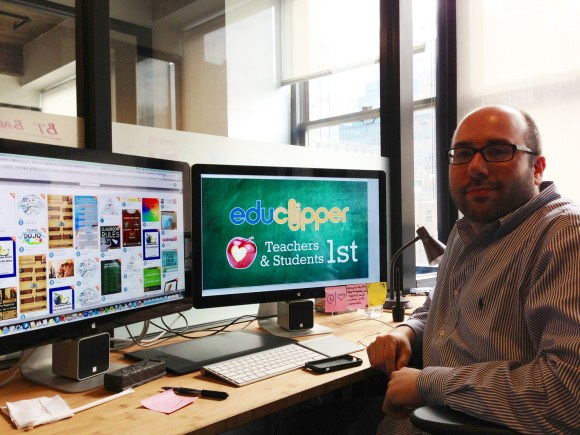
Adam Bellow decided early on in life that he wasn’t going to be a teacher, even though both his parents were respected educators. As a self-proclaimed ‘nerd,’ Adam started programming BASIC when he was 7 years old on an Apple IIe.
But life plans aren’t set in stone. After completing film school with a minor in sociology in 2003 he was an assistant teacher at The Churchill School (a school in Manhattan for students with language-based learning disabilities). In 2005, Adam took over teaching a class, “Technology in the Special Ed Classroom,” to 22 eager graduate students at Hunter College. Over the next couple of years, he started to piece together a “terrible catalogue of sites using iWeb,” in his words, and in 2007 the first version of eduTecher was born. “I thought of it simply as a place to organize resources for my class,” Bellow remembers, “and then when I eventually saw hits coming in from Australia and China I realized was meeting a need for a larger community.” His entrepreneurial spirit began to blossom.
Evolution of eduClipper
The countless positive testimonials motivated Bellow to continue eduTecher as a side project while he worked full time with a series of teaching jobs, technology training positions, and as Director of Technology for the College Board Schools. In 2009 Bellow launched one of the first edtech iPhone apps, eduTecher Backpack, and the momentum continued. “I was curating the web for educators and it was cool to see the community organically grow.”
In 2011 he added a custom social network component and began spending more and more time building in new features. “I thought about what it would mean to work on this full time. I put out a survey to my edtech friends to get their input on what aspects of eduTecher I should rebuild and possibly even build a business around.”
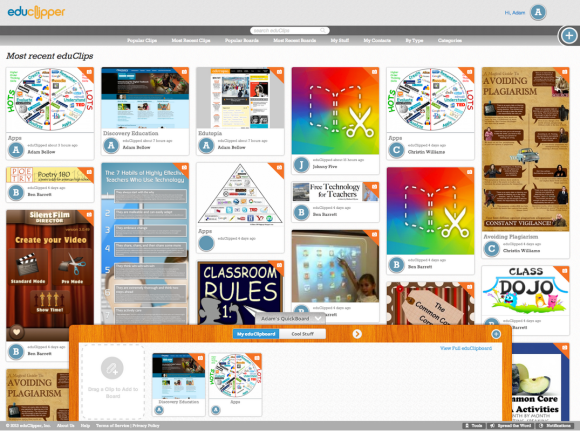
The feedback was overwhelming and he learned that what educators valued most was the simple, visual curation element that eduTecher had offered. Around this time, Pinterest was gaining popularity, which led him to think about how he could optimize the “clipboard” experience specifically for educators.
Bellow built initial mockups for the rechristened eduClipper in Keynote and in early 2012 outsourced the project to developers in India through Elance. He convinced his wife to let them put some money into this project and began working night owl hours to test out his idea. “It was rough…On a typical day, I’d wake up around 3 am to work on my startup until 5 am, before I left for a full day of work. Then once I’d tucked the kids in at night I’d jump back online. I was sleeping around 3 hours a night and it was not sustainable.”
However, all that hustling paid off by June 2012. He had hoped that the first iteration of the site, intended to be a proof of concept, would attract 200 users. Instead, he got 20,000 a month. He realized he was onto something and decided to pursue the project full time.
He was blown away. “The number of accounts created and positive buzz around the potential was a clear indication that I had to explore the possibilities. I made the transition from educator to entrepreneur; however I had no knowledge of startups beyond watching The Social Network and religiously reading TechCrunch and other related blogs.” Connecting with the growing edtech community was a significant driver in his success and after a serendipitous encounter with Jeff O’Hara, co-founder of Edmodo, during a trip to Chicago, Bellow was more motivated than ever to build his own product and company.
Bellow is currently gearing up for a major re-launch of eduClipper slated for June and expand his user base beyond the 25,000 that he currently supports; at last count, there were 16,000 on the waitlist.
Show Me the Money
Balancing his schedule between teaching and product development was grueling. But for Bellow, nothing prepared him for the plunge into the fundraising world in the New York venture capital scene. “At first it felt like a waste of time,” says Bellow, who felt awkward revealing that he didn’t have all the answers. Over time, he became more comfortable going to investors for advice after having met many who supported his vision for change. And he realized, “who wants you to succeed more than your investors?”
Bellow is getting ready to close his seed round which includes some luminaries in the edtech space.
Lessons Learned
Consistent with the Valley’s spirit to embrace failure, Bellow is quick to admit that he made a ton of mistakes along the way. “The trick is to learn quickly and keep going.” In thinking back on what helped eduClipper come to life, Bellow offers these few bits of advice:
-
Focus on real pain points. “Don’t just set out to build something cool. If I set out to build Pinterest for educators that would suck. Start with a real problem and understand that pain point that you’re trying to resolve.”
-
Community is at the core of everything. “Even before there was a real product, I focused on talking to people and being accessible. Growing my network in the startup space, especially around edtech, has been invaluable especially fumbling through our failures.”
-
Education is about people. “Our core values, as you can see from the sign on our door, is that teachers and students come first. If we started from the perspective of trying to make a ton of money it would never work.”
Fellow educators often ask Bellow if he misses the classroom, to which he replies, “I still think of myself as a teacher. I train a ton of people in schools all the time. I miss doing that legitimate work with kids, but I think that what we are developing is designed to help kids and teachers get results everyday.”
Adam will be the keynote speaker at ISTE in San Antonio this June. You can follow him on Twitter at @AdamBellow.
Profile #2 in the Teacherpreneur Spotlight Series that I’ve produced in collaboration with EdSurge.
Angela Estrella’s personal fascination with technology began during her undergrad years at UC Berkeley, using her Palm Pilot whenever she was riding on BART. “I used that Palm Pilot ALL the time- as a calendar, to take notes so in many ways that was my first ‘smartphone.’”
Her passion for teaching traces back to her own experience in middle school, where she was deeply inspired by teachers who took an interest in her and motivated her to become the first in her family to graduate from a university. Fast forward a few years after graduating from Cal and she found herself teaching at Overfelt High School in East San Jose, which didn’t quite have the resources to match Angela’s passion for technology. Still, she quickly noticed that her students were more engaged when she used various tech tools, especially those that involved using videos to demonstrate their learning. This inspired the savvy entrepreneur in Angela to seek out tech grants, and in collaboration with a visionary principal her school was awarded a substantial grant to start a Multimedia Academy at Overfelt through the CA Partnership Academies (CPA) Program.
“I encourage aspiring teacherpreneurs to identify small pots of local funds, such as the SVEF Innovation Grants or funding from your PTSA, to fuel your vision. I’ve also had 3-4 grants funded by DonorsChoose, so that’s been really helpful.” She added that starting off small creates a unique sense of ownership and the ideal scenario is to collaborate with local schools or educators to apply together. “As a member of SVCUE (the Silicon Valley chapter of Computer Using Educators) I can apply for their mini-grants. I think joining organizations like your local CUE affiliate is a great way to connect with educators and learn more about professional development and grant opportunities.”
Things changed when Angela began teaching in the more affluent Cupertino area in 2010, where teachers and students had more access to technology. But new challenges surfaced. While teachers had access to the latest devices, such as iPads, Apple TVs and SmartBoards, few of them had the knowledge or confidence to integrate them into their teaching practices.
So Estrella took it upon herself to create a more collaborative environment among her students and fellow faculty to help one another locate and try out new tech tools. As Lynbrook’s Library and Media Teacher for the past couple years, Angela has launched some innovative programs for students and teachers such as the Virtual Vikings and redesigning their Tech Menu Days. Virtual Vikings, essentially a student-powered geek squad, has illustrated for teachers how students can provide real-time tech support and enable the smart adoption of tech tools in the classroom. Through Tech Menu Days, Angela has tapped into the expertise within her teaching community to showcase best practices on how to use various edtech tools, such as Google Aps for Edu and KidBlog.
Fostering support and buy-in from her district has been a major factor in her success. “I’m working with our Director of Technology at the District to expand what we’re doing,” she said. “That guidance and support is essential to scaling what we’ve proven works at Lynbrook.”
Estrella turns to her extensive online PLNs (professional learning networks), mainly via Twitter and Facebook, for sources of inspiration on how to creatively use tech in her class. She’s constantly trying out edtech tools and finding creative ways to introduce those tools and the entrepreneurs who build them to her school community. It’s all part of her larger vision to create a culture of experimentation and embracing of edtech for both students and teachers at Lynbrook.
Hear directly from Angela about her work from this video profile, connect with her on Twitter @am_estrella or check out her blog.
In the first of my ongoing Teacherpreneur Spotlight series with EdSurge on innovative educators who take initiative to experiment with new teaching practices and tech tools, we look at Ryan Kinser, 8th grade English teacher at Walker Middle Magnet School in Tampa, FL.
Ryan Kinser stumbled upon his passion for education the second time around. After an extensive career in the TV production world he found himself recruited into the DC Teaching Fellows Program. After an incredibly challenging first year, leaving school each day exhausted and emotionally spent, Ryan considered that maybe teaching wasn’t the right fit. But, for some reason that did not sit well with him. “I loved the few moments that I was teaching and not just trying to tread water.”
After moving to Tampa, FL, like any good student he decided to give it another try. He found a Walker Middle Magnet School, a school with strong leadership that recognized the value of his business background, and this time was different. Through strong mentorship Ryan realized “I started to find out what kind of teacher I could be and I loved it. A big piece of that was mentorship, which is SO critical to attracting and retaining the best teaching talent.”
Ryan’s teacher turnaround story doesn’t end there. In 2010 he was a finalist for Hillsborough Teacher of the Year which helped him catch the attention of the Center for Teaching Quality (CTQ). Ryan joined CTQ as one of their handful of teacherpreneurs in a hybrid role where he maintains his role in the classroom during morning hours and spends his afternoons focusing on his areas of interest: advancing teacher leadership, developing PLNs/VLCs and supporting the edtech ecosystem. The truly liberating piece is that CTQ works with the district and school to negotiate Ryan’s release for the 2nd half of the day, over which he has full autonomy to define his contribution as a teacherpreneur. Those afternoon hours are often focused on blogging, research as well as various speaking engagements and advising local, state and national stakeholders on the importance of empowering more teacherpreneurs.
Sounds pretty amazing, huh? Of course my immediate question was how do we create more opportunities like this for teachers across the country. CTQ has been looking at various ways to scale their efforts through their virtual community which current engages 1500 teacher leaders nationwide. In his teacherpreneur role, one of Ryan’s tasks is to think about working with other districts and next year Tampa will be rolling out 15 new spots supported with Title 1 funds.
Edtech Insights
You may find it surprising that a middle school English teacher’s favorite edtech tool is Code HS, a platform for teaching high school students how to code, which he became deeply familiar with after mentoring the Imagine K12 startup last fall. “We are rethinking literacy- what does it mean to write and create in an online world and coding is a big aspect of that shift.” In 2012 Ryan received one of 10 Magnet School of America grants nationwide, which he used to conduct a mobile app-building project with his students. This game is an example of one what student created during that project. Creating this opportunity for his students illustrates how teachers can (and must) fill in their own tech gaps rather than waiting for instruction or professional development to find them.
Beyond the tech, connecting in the offline world is equally important to supporting the teacherpreneur process. Having the chance to speak and travel to various education conferences (which could be it’s own full time gig) I asked Ryan which ones he found most beneficial. “I found the scope and number of teachers at ECET2 (Elevating and Celebrating Effective Teachers and Teaching) really impressive.” Another one that stood out for him was FETC (Florida Education Tech Conference.) Both of these have already passed for 2013, but looking to the rest of year Ryan will definitely be at ISTE in San Antonio in June, and of course, EdSurge will be there, too. While these events can be effective what is really needed is for “more teachers to publicize what they are doing. There is such a silo of education, we don’t step outside our classroom doors.”
Now let’s hear a bit from Ryan directly:
With the explosion of social media tools no one has to wait to attend a conference to learn about a new tool or share their favorite trick. What are your favorite social communication tools?
I love Twitter and that’s how I get most of my information. I lurked around for 9 months before I sent my first tweet and often share that with teachers that are new to Twitter. It’s easy to be a lurker, which is low-risk and potentially high-reward. With my VLC work I am a big YouTube and Google+/HangoutsOnAir fan. Honorable mention to Edmodo, SlideShare and LiveScribe.
What advice do you have to new teachers and/or aspiring teacherpreneurs?
They have to be their own advocate. Do the work and make sure it’s needed by someone else. Be a self-advocate. Get connected with other teachers, with social media it’s impossible not to connect someone that knows someone else. Once you’re doing the work you’re passionate about, find the people who can advocate with and on your behalf.
Also, teachers need to be vulnerable and learn alongside their students. If you’re not adaptable, then there is no use for you in the classroom.
What efforts would you like to see that would truly advance the role of teacherpreneurs?
Meetups are important in regional pockets but what I’d love to see is a widespread exchange program– teachers rotate through an edtech program which also allows entrepreneurs to spend time in the classroom. I’ve been working closely with CodeHS to connect them with my educator network and would love to see this type of edtech-educator exchange on a grander scale.
One program I created at my school to help teachers get more comfortable with tech is small group office hours. I get 10-15 people together and we have a casual and customized conversation about Google Hangouts, Dropbox, etc… They are optional but I invite specific groups of teachers based on their needs and discuss how certain tools can make their teaching lives easier. I hook them by asking questions like “Have you thought about expanding the walls of your classroom? Stop by for 20 min and I’ll show you how.”
(Ryan Kinser can be reached at rkinser@teachingquality.org and followed on Twitter @RyanKinser. He also blogs for CTQ’s TransformEd and Impatient Optimists.)
With the surge of interest in the ‘flipped classroom,’ Meograph saw many teachers bringing this tool to their classrooms, creating content themselves as well as assigning projects for students to craft their own stories. This student created story on the ‘Causes of the Civil War‘ is a cool example of some of the projects created using Meograph.
This step of simplifying the creation process is critical to ensuring widespread adoption of project-based learning strategies, where studente take control of their own learning, document their progress and demonstrate understanding. While Meograph didn’t intend to be an ‘edtech’ startup they have responded well to the significant interest and feedback from the educator community on how this can be used as a learning tool.