Categories
Edu Startups Marketing & Distribution

Top 5 Tips for Edtech Storytelling

Sharing your Story: Marketing to the Fragmented K12 World

In consulting with several education related startups, I often get asked the best way to approach marketing to the fragmented K12 space. While there is no easy way to get the attention of massive numbers of teachers & parents at the same time, here are the key strategies I’ve found that successful (read fast-growing) edtech startups leverage to tell their story. Expert marketer and blogger Neil Patel outlines tips for low-budget storytelling through his post on 21 Big Marketing Ideas for Small Marketing Budgets. Pulling from these strategies, I’ve highlighted the Top 5 ways to start with a lens from the edtech perspective.

  1. Comment on blogs

Edutopia and Mindshift are great places to start as they already have vibrant communities that contribute posts and comments. Join the conversation by following a few key authors and establish your own voice through consistent commenting.

  1. Start blogging yourself

Use your own blog as a platform to share information about your product and progress, as well as general trends in a specific aspect of edtech. Choose 1-2 key areas (ex. STEM, Blended Learning, Mobile Learning, PD, etc…) and provide useful updates/tips on what’s going on in that space. There are many great blogging platforms (Tumblr, Posterous) but teachers love WordPress and if your blog takes off a bit, this is another way to build community with educators through WP following and commenting. Invite your early-adopters to guest blog. This deepens their engagement, provides an authentic voice (educators love hearing from other educators rather than product folks) and offers fresh content.

  1. Leverage social networks: Engagement > Size/Reach

If your startup has been around for more than 5 minutes, then it’s likely that you already have a FB page and a Twitter handle. Social Media Marketing, specifically to teachers, can be it’s own massive post but for now the top tip is engagement matters more than the size of your community. On FB, this means looking at the number of people ‘talking about your page’ rather than just the total likes. On Twitter, follow the Top Edu Tweeters and join the weekly chats to share updates and get a sense of what educators are talking about. Lastly, Edmodo, striving to be FB for schools, also has a feature where you can create a community around specific content areas or tools/services and engage with the teacher and students who are on their site. With over 6 million users (as of March 2012 and is gearing up international expansion) this is the largest centralized community of educators anywhere on the web and it’s growing fast!

  1. Craft some Case Studies

Another benefit that comes from early adopters are enthusiastic testimonials. Take time to develop these into case studies, even a couple 1-pgrs can be useful to spread the word about your effectiveness and build your brand. Remember, educators love hearing from other educators and case studies can help you capture the enthusiasm and results from your initial users. Want examples? Check out how LearnBoost has captured early user stories.

  1. Speak at Events & Schools

The edtech scene is heating up and with that comes an increase of events and speaking engagements. Meredith Ely runs the monthly EdTech Meetup (Thurs evenings in SF) and often seeks to shine the spotlight on members, giving startups a chance to share their story. This is great practice for more formal speaking events and even pitching to investors. EdSurge, the weekly edtech newsletter, always highlights upcoming events (it’s long so scroll all the way down) and reach out to the organizers to see if you can join a panel or even give a quick pitch.  Reach out to local schools and see if you can stop by a staff or department meeting to talk about your work. This requires some cold outreach and can be particularly challenging, but if successful, will lead to some very valuable relationship building and customer development opportunities.

Overall, just remember that utility drives adoption and community drives retention, and the challenge is figuring out the best way to tell your story. If you’re delighting your users, especially teachers and parents, they will be drawn into the community and will happily evangelize your product on your behalf.

Categories
Entrepreneurship

The Long Tail of Edtech

In case you missed it, last weekend education technology enthusiast, Steve Hargadon, applied the long-tail framework to explain some of the key trends we are seeing in the edtech space right now in his post, A “Tail” of Two Edtech Agendas. I think this is a very helpful way to understand why certain startups are capturing much of the capital and media attention right now, even though they may not be poised to deliver the deeper disruption that many of us are hopeful for.

I cannot agree more with his point that we must shift our focus to solutions that target users (students, educators, parents) that make up the long tail. He describes “success in the tail is differentiation, diversity, and choice,” which I believe are the basis of personalized, self-paced learning that can (and in a few cases already are) revolutionizing teaching and learning.

He goes on to state “edtech reform in the head is about using money to scale simplified solutions of that which is popular, or the status quo. Ed tech reform in the tail is about using the network to provide freedom and choice” which captures an important aspect of scaling a truly differentiated and choice-based model, the network. In order to meet the needs of all types of learners, we must engage and build community with all types of educators, establishing a solid network to capture and deliver customized learning solutions.

If you’re interested in helping bridge the educator and edtech communities to start establishing this type of network right here in Silicon Valley, please join us for our first Teacher Tech Talk event, Friday March 23, 4-6pm at Kepler’s Books in Menlo Park.

Categories
Conferences/Events

Cultivating the Entrepreneurial Learner

I just got around to watching John Seely Brown’s keynote address, Cultivating the Entrepreneurial Learner in the 21st Century, from the Digital Media Learning (DML) conference last weekend in San Francisco. It is quite long (over an hour but he starts at ~13min ) and I’d like to share the points that resonated with me the most:

  • The technology is the easy part. The hard part is what are the social practices around this and the institutional structures that match the new technology/tools
  • Half-life of skills is ~5 years, people must be constantly reinventing themselves and their skills
  • Maria Montessori and John Dewey were the education heroes of some of the top tech entrepreneurs
  • Tech amplifies curiosity
  • Interesting communities and ideas being generated around the social edge of massive multi-player games (like WOW)
  • Truly customized learning- can we develop an eHarmony tool for 1:1 tutoring and highly skilled mentorship?
  • Meaning emerges as much from context as content, making teachers/librarians/mentors even more important
  • I especially liked his message on collectives, essentially the new form of learning communities, and we already have some tools to foster these types of social interactions but need new tools (conceptual lenses through play)- networks of imagination
  • Tinkering captures 3 core lenses: Learn + Make + Play, new learning systems need to restrike a balance between these 3
  • He asks us to consider the permissions we give students to play and explore in classrooms? I’d like to add that it’s even more important that we give teachers permission to experiment and play with various teaching practices and redefining what a ‘successful classroom’ looks like.

I was tempted to attend the conference this year and hope to make it happen sometime in the future.  I’m pleased to see that this and many other videos from the event are posted online and plan to watch them throughout the next couple weeks.

Categories
Marketing & Distribution

Creating Distribution Pathways

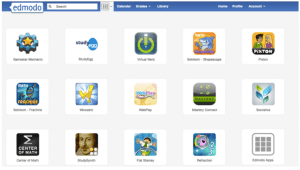
Edmodo, considered Facebook for schools, announced at SXSW that they are opening up their API to third party developers to build and more importantly distribute their apps on this platform. There are more detailed write-ups from TechCrunch and HackEducation, and my favorite part is “Edmodo is also launching a Teacher-Developer Exchange to connect educators directly with application developers so that together they can create the apps most needed in today’s classrooms.” As Edmodo begins tackling the massive challenge of distribution into schools and is engaging educators in the process, are they on their way to becoming the OS for K12?

Categories
Edu Startups Entrepreneurship

Putting the ‘ed’ in edtech

Tim Brady welcoming the Educator Day crowd

Over the past couple weeks I’ve been to some great events that are really trying to introduce and amplify the educator voice into the edtech startup scene. This past Friday, Imagine K12 hosted its Educator Day event which attracted an even larger crowd ( ~100 people) than the last batch with an even stronger presence of teachers from traditional public schools. I believe this type of event is more important for both the educators and the entrepreneurs than the typical investor-focused demo days and I hope to see more opportunities for these groups to interact and share feedback during the program.

Last weekend, Startup Weekend Edu hosted an event at Kno in Santa Clara which drew a large educator alumni crowd, mainly from the TFA network. Katrina Stevens, co-founder of LessonCast which came out of one of the first Startup Weekend EDU events, was guest blogging all weekend trying to capture the diversity of energy and ideas between the teams.  The success of the event was largely due to the efforts of Nihal ElRayess, a Teach-For-America alum who pushed hard to make sure the were a significant number of educators in the room, and even hosted a competition among TFA alumni where the winner was offered a free trip and participation in the 54-hour event.

Impressive teams. High energy. Cool ideas. However, even with the efforts to engage educators the representation was mainly TFA alumni, so very few ‘educator’ attendees were actually current teachers, in classrooms right now. I had some great conversations with several other mentors on why that is and if there is anything we can do about it. My take is that teacher time is so very precious that it is really difficult to ask them to give up 54 hours of it, even for an event as energizing as Startup Weekend. I think we need to create and promote other opportunities that encourage educators to engage with the edtech community in a more casual and less time-intensive ways. If you have any suggestions for simple ways to bridge these communities, I’d love to hear them!

Categories
Entrepreneurship Marketing & Distribution

Engaging the education community

I had the opportunity to speak to Imagine K12‘s 2nd cohort today on how to approach marketing/distribution in edtech, which for me centers around building community, empowering product evangelists and engaging teachers/parents to help share your story. I’m happy to share my slides and would love to hear from anyone who has had particular success engaging with their user community to grow their brand and user base. What have you found are the best strategies for reaching educators and parents in this highly fragmented environment?

Categories
Conferences/Events Edu Startups Entrepreneurship

Future of Education…but not for everyone?

As part of Pearson’s recent efforts to make things more open and interactive they hosted an event with a diverse panel of folks attempting to discuss the “Future of Education- Learn Anything, Anytime, Anyplace through Informal Learning.” The moderator, Leonard Medlock, a fellow Stanford Ed Alum (LDT ’11) and current edSurge contributor, defined informal learning as learning that is “learner driven, flexible and not restricted to time or place.” The ambitious topic and my support for edSurge attracted me to the event but I have to say I was pretty disappointed, mainly due to the narrowly defined notion of ‘anyplace.’ For me, the potential for technology to impact education now more than ever before is the ability for it to level the playing field and ideally create environments for all learners to have access to the highest quality content, anytime and anyplace.

However, the general message from the panelists was that ‘anyplace‘ means wherever people already have access to devices and internet connectivity, as well as exposure to a culture of self-driven learning. Beyond that, it is really quite shocking how little people think or talk about getting these products to communities that need it the most. Credit to Sifteo co-founder, David Merrill who shared a story of donating Sifteo cubes to a local San Francisco school, but sadly no broader vision for how to scale those efforts. At the end of the day, I understand that they are a business driven by the need for sustainability, but then can you really say you’re representing a movement to provide learning opportunities for anyone, anytime and anyplace?

Udemy founder, Gagan Biyani, strongly stated that students either need to have access to really high quality schools or parents or they don’t have a chance to be successful within the current system. While this is probably true (and lead to a lively conversation about what constitutes high quality schools and teachers), I thought the focus of this particular event was to get the best and brightest people thinking about solutions to help all learners, anytime and anyplace, through informal settings outside the current dysfunctional school system. It is much easier to create informal learning options for kids who are fortunate enough to attend good schools and/or have good parents. Many of those learners are  already empowered to take control of their education and really take advantage of learning anything, anytime, anyplace. But isn’t limiting the conversation to those populations such a narrow way to discuss the future of education and informal learning?

I think the bigger challenge around the future of education is making learning anything, anytime, anyplace a reality for all students. This goes beyond distributing devices, which we saw clearly from the crash and burn of the OLPC program, and really extends to creating environments where people are empowered and motivated to learn. Brad Feld put it well in his blog post just today that “you can’t motivate people, you can only create a context in which people are motivated.” For me, creating these environments where people are motivated is the true challenge that we must tackle in thinking about the future of education and I’d love to find a community and go to events where people are talking and thinking about this broader issue.

Overall, the individual panelists are bright, inspiring and passionate entrepreneurs and the event attracted an interesting group of people. So, my biggest piece of feedback is directly to Pearson and the title of the event. Can you really claim to be fostering a conversation around the ‘Future of Education,’ focused on informal learning that can happen anyplace if that doesn’t include a large portion of the population that needs these services the most? While I know there isn’t a purely technical solution to creating motivating learning environments, I believe that technology can and will play a big role in helping people reaching their learning goals and I hope the tech community will embrace a broader definition of the future of education and what it means to truly make their products available anytime and anyplace.

Categories
Entrepreneurship

Accelerating Diversity

Update (2/18/12)- You can find an extended version of this post on Women 2.0.

Demo Days can be pretty exhausting experiences of information overload as you try to capture the energy of the various pitches & teams (YC has 65 this round) while chatting with old and new connections. However, I was pleasantly surprised by the StartX event last night, which began with quick pitches from their 9 startups followed by dinner and plenty of time to speak with the teams and others in the room directly.

For me, the most impressive aspect of the event was the diversity in the room, from the teams to the investors to alumni. More than enough has been said about ethnic and gender diversity in Silicon Valley, and I don’t wish to add to any of the complaints. I’d much rather focus on the solution and I believe that StartX exemplifies some of the progress that we need by selecting, supporting and launching a diverse group of energetic and brilliant entrepreneurs. Almost 50% (4 of the 9 teams) had female co-founders, as well as representation from several degree programs (not just CS) and age groups. With a mission focused on developing founders through experiential education, I believe recruiting a diverse cohort deeply improves the StartX experience for all and hopefully inspires increasingly diverse applicants in the future. In furthering that inspiration, I spoke with several of the female entrepreneurs about presenting to and mentoring programs that help encourage young girls to explore STEM fields and opportunities, such as the Technovation Challenge.

For anyone trying something new it is vitally important and deeply motivating to see people like you creating opportunities and success for themselves. (This is definitely true for first-generation college bound students and I imagine it’s the same for first-time entrepreneurs –it helps if someone is blazing the trail with you.) I’m thrilled with the role StartX is playing and am anxious to see how they will scale this to other universities and communities in the years to come. Just Start It!

Categories
Uncategorized

Let’s #EdChat

As a follow up to my recent post on the Top Edu Tweetters, I’ve created an overview guide of the most popular edu-related chats and how to easily join those conversations. If you’re new to Twitter chats, I recommend some tools that make it easy to manage those conversation streams. You may want to start tomorrow, Wed Feb 8th, with EdSurge’s inaugural #esinstruct Twitter chat on the best tools, tips and techniques for language learning. I’m always looking for ways to connect educators and edtech entrepreneurs so I’d love to hear your feedback on participation and outcomes from these discussions.


Categories
Uncategorized

Top edu-related Tweetters

Lately, I’ve been spending quite a bit of time thinking about the best way to connect tech-savvy teachers with some of the amazing teams and products I’ve encountered during my exploration of the intersection of education and technology. Many conversations have lead me to Twitter and I can’t tell you how many times I’ve heard- “Teachers love Twitter!”  That’s great. I’m a big fan too, but it has been a challenge figuring out who to follow and which conversations to join to easily get a sense of what’s going on in this space without getting sucked into the Twitterverse for hours on end. To help, I’ve created this list of Top Edu Tweetters that I’ve found most inspiring and informative. I’d love to hear who your favorites are… is there anyone I should add to this group? Is there a particular list that you’ve found interesting?

Also, stay tuned for post outlining the top edu related #chats and how best to participate.